
Rolando Matos, one of our highly engaged graduates from the Medical and Pharmaceutical Biotechnology programme at IMC Krems, is driving progress in automated and data driven bioprocessing as a Senior Bioprocessing Scientist.
Story
Where biotechnology meets digital innovation
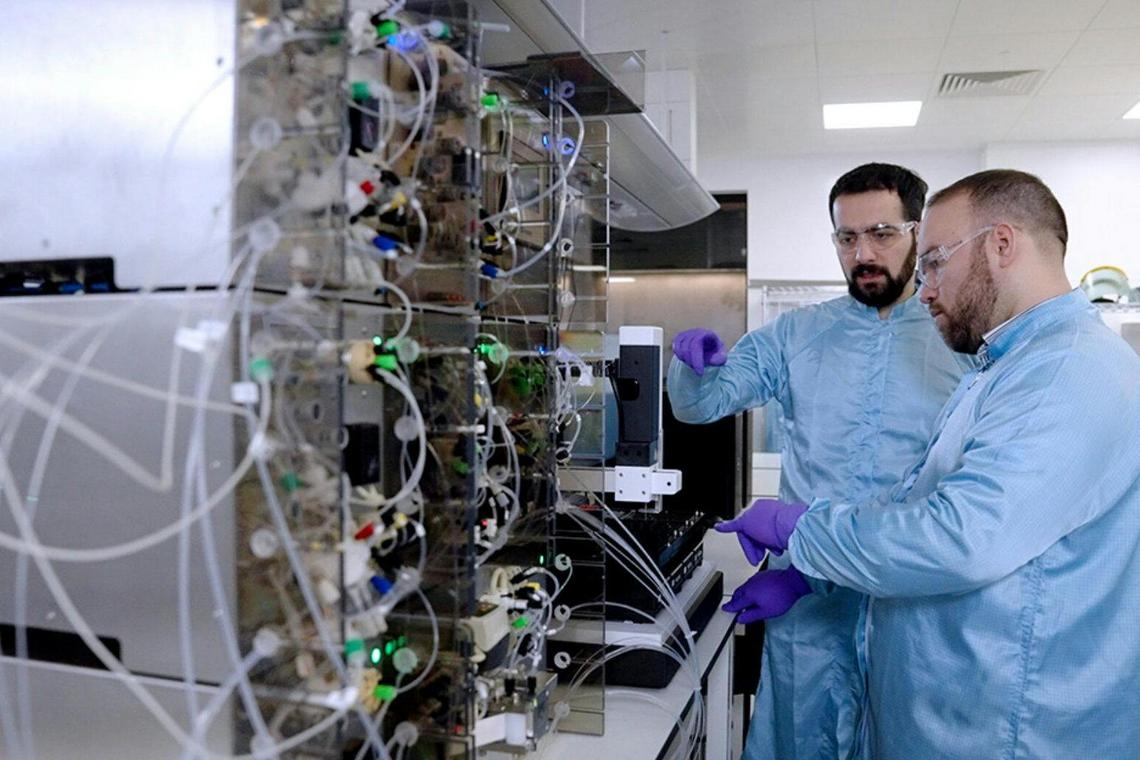
Bachelor in Krems – Master in Barcelona – PhD in Surrey
Rolando Matos works as a Senior Bioprocessing Scientist based in the UK, working at the intersection of biotechnology, digitalisation, and automation. His journey into this advanced field began with his bachelor degree in Medical and Pharmaceutical Biotechnology at IMC Krems University of Applied Sciences.
We met the successful researcher for an interview
“Thanks to the opportunities I had during my practical training semester, I was first exposed to the world of research, which encouraged me to pursue my curiosity and explore complex biological systems. This led me to study neuroscience in Barcelona, where I supported research projects focused on gene therapies and gained hands on experience in advanced therapeutic approaches. Working at the interface of biology and emerging technologies sparked a strong interest in how complex systems can be understood and engineered.
While I thoroughly enjoyed my work in neuroscience and gene therapy research, I realised that my core strengths and long-term interests lay in engineering and interdisciplinary problem solving. This motivated me to shift my focus towards biomaterials and tissue engineering, where I could better integrate engineering principles with biological applications.
Throughout my academic and professional journey, I have been fortunate to build a strong network of inspiring mentors and collaborators, which led me to the opportunity to pursue a PhD at the University of Surrey in cardiovascular disease, tissue engineering, and ex vivo model development.
Building on the solid foundation from my Bachelor’s training, I have continued to grow in interdisciplinary research and in tackling complex scientific challenges with confidence—ultimately leading to my current role at Cell and Gene Therapy Catapult.
Today, Rolando specialises in Process Analytical Technologies (PAT) and automation for cell and gene therapy manufacturing. His work focuses on using complex datasets, developing process models, and implementing digital twins to create more efficient, predictable, and high quality bioprocesses.”
Complex concepts across disciplines
A key strength of his work is his ability to communicate complex concepts across disciplines. Thriving in international, multidisciplinary teams, he brings together diverse expertise to develop innovative solutions for the challenging environments of advanced therapy manufacturing.
Rolando describes his studies at IMC Krems as the foundation for his professional path: hands-on laboratory training, an international perspective, and a strong research focus prepared him exceptionally well for a career at the forefront of biotechnology.
You work extensively with digitalisation, automation and digital twins. What motivates you to focus on these technologies, and how are they transforming bioprocessing today?
My motivation for focusing on digitalisation, automation, and digital twins comes from the growing importance—and complexity—of data in bioprocessing. Modern bioprocesses generate vast, multi dimensional datasets from sensors, analytical tools, and biological readouts; without structured automation and data integration, this information is difficult to interpret and fully utilise. Automation provides a coherent and reliable way to capture high quality, traceable data, forming the foundation for advanced modelling and learning approaches. These digital representations of processes enable a deeper understanding of biological complexity and support data driven decision making across development and manufacturing.
More broadly, these technologies are transforming bioprocessing by enabling standardisation, scalability, and improved accessibility of advanced therapies. In cell and gene therapy, automation and digital twins are particularly powerful for addressing challenges such as scaling out autologous manufacturing. By characterising biological systems and building transferable digital twins, processes can become more robust to patient specific variability and more predictive of batch outcomes. This has the potential to significantly reduce costs, improve reliability, and ultimately make life saving therapies more accessible.
What developments in cell and gene therapy do you consider most promising for the near future?
The most promising developments in cell and gene therapy centre on scalability and broader applicability, particularly for personalised and autologous treatments. As the field matures, there is increasing momentum towards scalable manufacturing and distributed delivery models that can meet patient specific demands while reducing overall costs. New regulatory pathways and manufacturing innovations—such as allogeneic therapies, in vivo editing approaches, and streamlined process analytics—are helping to address long standing barriers to broader adoption and clinical utility. These trends have the potential to make complex therapies more accessible and sustainable for healthcare systems.
What were your highlights in Krems?
My time in Krems was a true highlight, as the environment fostered curiosity, open exchange of ideas, an international atmosphere, and learning through hands on experience. I’m grateful that many of the people I met there remain close friends today.
