
For three days, discussions at IMC Krems focused on nothing less than the future of our society. On artificial intelligence and data analytics. On sustainable materials. On new pathways to climate-friendly energy. And on the question of how chemistry can help address the major challenges of our time.
Press
Trust in Chemistry
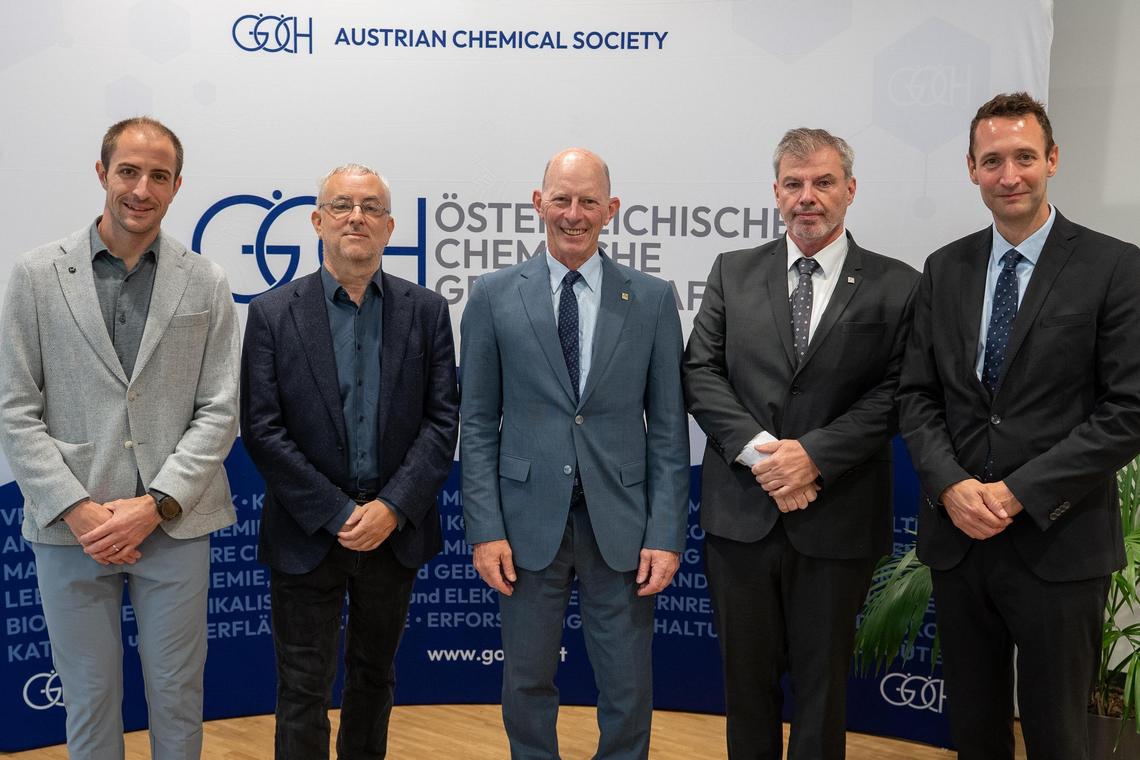
With the Austrian Chemistry Days 2026, IMC Krems succeeded in bringing one of Austria’s most significant scientific conferences in the natural sciences to Lower Austria. Researchers, students and industry representatives came together to discuss current developments, exchange new ideas and explore the future of chemistry.
Under the theme “Trust in Chemistry”, one message became clear: chemistry remains a key discipline for innovation, sustainability and technological progress.
A strong signal for Krems as a research hub
For the first time, the Austrian Chemistry Days were held at IMC Krems. In cooperation with the Austrian Chemical Society - Österreichische Chemische Gesellschaft - GÖCH and the Czech Chemical Society, the campus became the meeting place for Austria’s and Europe’s chemistry community for three days.
The decision to host the conference at IMC Krems highlights the growing importance of the university in the field of applied chemistry. Research, education and practical application are closely interconnected here, and this connection was reflected throughout the event.
Alongside universities and research institutions, numerous industry partners were represented, including BASF, KremsChem, Anton Paar, Bruker, Shimadzu, Agilent and other leading companies in the sector.
AI and chemistry: turning data into discovery
One of the most discussed topics of the conference was the growing impact of artificial intelligence on chemical research.
Particular attention was drawn to the keynote presentation by Peter Schoenmakers (University of Amsterdam), who explored the role of AI in analytical chemistry. His insights demonstrated the enormous potential of intelligent algorithms in processing complex analytical data, developing novel analytical methods and accelerating scientific discovery.
The discussions highlighted a clear trend: the future of chemistry is no longer shaped exclusively in the laboratory. It is increasingly emerging at the intersection of chemistry, digitalisation and data science.
This development is especially relevant for IMC Krems, where modern chemistry education extends far beyond traditional laboratory work and places growing emphasis on digital competencies.
Sustainability as a common thread
Sustainability was another dominant theme throughout the conference. With Erwin Reisner from the University of Cambridge, one of the world’s leading experts in sustainable energy technologies, the conference welcomed a distinguished plenary speaker. His research on solar fuels, CO₂ utilisation and circular economy concepts demonstrated the vital contribution chemistry can make to achieving global climate goals.
A particular highlight of this year’s Chemistry Days was the keynote by Harald Pflanzl, Executive Advisor and a highly accomplished international business leader. Throughout a career spanning more than 30 years, he held a range of senior leadership positions at BASF, including several roles as Senior Vice President and Managing Director with responsibility for markets across Europe, Africa, the Middle East, Central Asia and Latin America. His expertise covers corporate growth and transformation, restructuring, as well as mergers and acquisitions. In his keynote, “Shaping the Future – Without Chemistry and Chemists, There Is No Future,” he explored the essential role of chemistry and chemists in driving innovation, advancing sustainable development and addressing global challenges.
Numerous additional presentations and poster sessions focused on green chemistry, resource-efficient processes and sustainable materials. In doing so, the conference addressed precisely the issues that increasingly shape scientific, economic and societal debate.
International excellence in research at IMC Krems
The scientific programme brought renowned researchers from across Europe to Krems. Alongside Peter Schoenmakers and Erwin Reisner, contributors included Aleš Růžička from the University of Pardubice and Karsten Haupt from the Université de Technologie de Compiègne, who presented the latest findings from their respective research fields.
The diversity of topics showcased the breadth of modern chemistry, ranging from analytical chemistry and materials science to biomedical applications and sustainable technologies.
For students, researchers and industry partners alike, the event created valuable opportunities for professional exchange and international networking.
For Uwe Rinner, Head of the Institute of Applied Chemistry and Conference Chair of the Austrian Chemistry Days 2026, the event represented far more than a scientific conference: “Trust in chemistry is not built through slogans, but through knowledge, transparency and tangible solutions to the challenges of our time. The Chemistry Days demonstrated the remarkable innovative strength of our discipline, from sustainable raw materials and advanced analytics to artificial intelligence. We are especially proud that this important discussion could take place here at IMC Krems.”
Research, education and the future in one place
The Austrian Chemistry Days 2026 clearly demonstrated the vital role of applied research in driving innovation and societal progress. At the same time, they highlighted how closely IMC Krems is connected to the defining topics of the future, from digitalisation and data analytics to sustainability and the circular economy.
For IMC Krems, successfully hosting the conference was not only an organisational achievement but also a strong statement of its position as an internationally connected centre for higher education and research.
Study chemistry at IMC Krems
Those passionate about the future of chemistry can choose from two specialised degree programmes at IMC Krems:
- Chemistry (Bachelor): This English-language bachelor programme provides a solid foundation in modern chemistry, analytics, digitalisation, green chemistry and industrial practice.
- Sustainable Chemistry and Digital Processing (Master): Also taught in English, this master programme combines sustainable chemical processes with digitalisation, data analytics and the demands of the chemical industry of tomorrow.
Through these programmes, IMC Krems is already educating the next generation of chemists who will develop the solutions to tomorrow’s challenges.
