
Press

Standardisation as the New Key to Technology Transfer

IMC Krems launches EU-funded research project “HELIX”


How can scientific findings be transferred to business and society more quickly, effectively and sustainably? This is the central question addressed by the new research project “HELIX – Knowledge Valorisation through Standards and Norms” at IMC Krems. Under the leadership of Prof. (FH) Dr. Alfred Radauer, Head of the Institute for Business and Innovation and Programme Director for Management at IMC Krems, the interdisciplinary team is exploring how standardisation, an often-overlooked channel, can significantly enhance technology transfer.

HELIX is funded by the Province of Lower Austria within the framework of business and tourism promotion, and co-financed by the European Union through the ERDF programme.
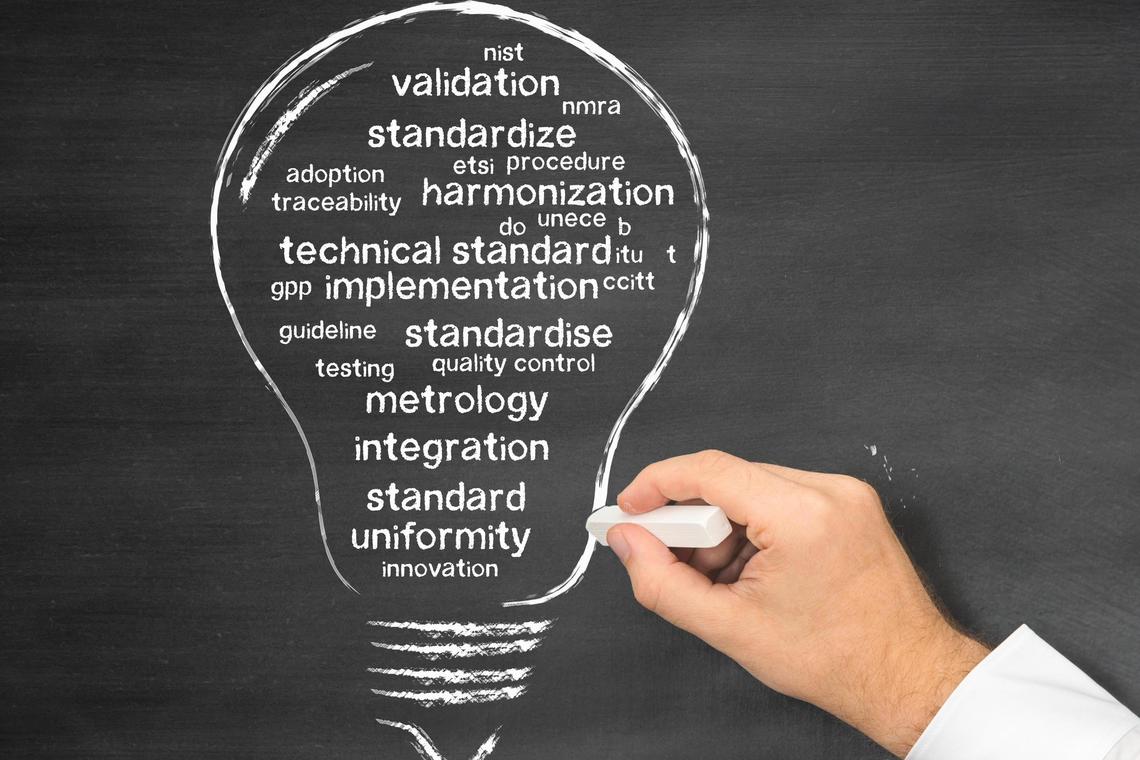
 

(c) AdobeStock;CrazyCloud; With the EU-funded project HELIX, IMC Krems, led by Prof. (FH) Dr Alfred Radauer, is exploring how norms and standards can serve as strategic tools to accelerate technology transfer and anchor research more sustainably in business and society.

Standards – the underestimated driver of innovation

Standardisation – the process that determines, for example, the dimensions of an A4 sheet of paper, the shape of USB-C connectors, or management standards such as ISO-9001 – is often regarded purely as a technical procedure. The significance of how standards emerge, and the role they play in the success of innovation, is frequently underestimated in academic research.
HELIX specifically addresses this gap: when applied correctly, standards and norms can help research results reach the market, accelerate innovation and amplify societal impact. Standards ensure, for instance, that different devices can communicate with each other if they comply with the relevant specifications, or that verifiable minimum safety requirements for new products and services are in place. This means that the development of standards must be given due attention during the innovation process.
“We want to show that standardisation is not just about specifications or creating regulations in tandem with legislation, but that it is a strategic instrument to translate knowledge into market-ready applications,” explains Alfred Radauer.

Targeting early-stage research

The project is aimed particularly at research activities at Technology Readiness Levels (TRL) 2 to 4 – the early stage between basic research and applied development. The thematic focus lies on environment, climate & resources as well as medicine & health.
Another focus is on researchers at universities and non-university institutions, whose performance is traditionally measured by the number of academic publications rather than participation in standardisation committees. HELIX will investigate to what extent their involvement in standardisation processes can be increased, and which motives and challenges already influence their participation.

Research with international impact

IMC Krems is already recognised as a leading European player in “standardisation research”. The team around Alfred Radauer played a key role in an EU-wide scoping study, the results of which were incorporated into strategic recommendations for the entire European Research Area. These outlined how universities and research institutions should position themselves in terms of standardisation, even in the face of knowledge gaps.
It is also clear that whoever significantly shapes standards is often better positioned to control the markets behind them. Accordingly, standards and standardisation are of high political and strategic importance not only in the EU but also in countries such as the USA and China.
With HELIX, IMC Krems seeks to further strengthen its international standing in this field, expand knowledge about standardisation with the involvement of universities and research institutions, provide strategic input for shaping European innovation policy, and ultimately establish Lower Austria as a “best practice region” for standardisation research.

Concrete objectives of the project

HELIX pursues several key objectives:

  • Collecting data on the extent, motives and barriers to researcher participation in standardisation processes, with a focus on Lower Austria.
  • Developing policy recommendations for universities and research institutions on how to better integrate standardisation into technology transfer.
  • Enhancing the visibility of Lower Austria as an innovation and research hub in the field of standardisation.

Contribution to central future issues

Standards are ultimately a cross-cutting issue and play a crucial role in areas such as the circular economy, greenhouse gas reduction and digitalisation. By integrating the scientific sector more effectively into standardisation, innovations in these fields can be disseminated more quickly and efficiently – with positive effects on economic growth, employment and sustainability.
“With HELIX, we are not only able to improve research practice, but also contribute very concretely to the competitiveness of Lower Austria,” emphasises Radauer.