
Informal carers carry a significant part of Austria’s health-care system – often behind the scenes and frequently at the limits of their own resilience. It is precisely these individuals who are at the centre of Stefanie Lentner’s research. As an occupational therapist, research associate and PhD student at the Institute of Therapy and Midwifery Sciences at IMC University of Applied Sciences Krems (IMC Krems), she combines academic expertise with many years of practical experience to develop new approaches for the sustainable support of informal carers.
Press
Research Against Silent Overload
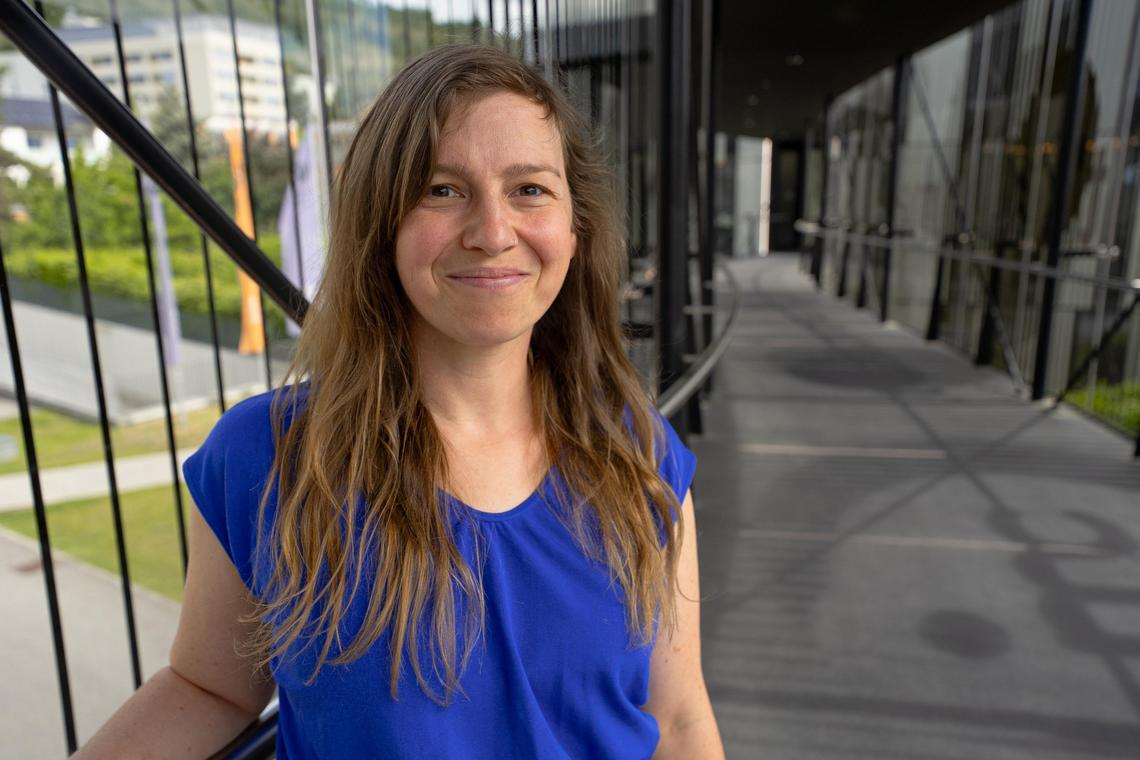
“My research focuses on informal care. More specifically, I am interested in how family carers manage their daily lives in order to better understand how their situation could be improved – in a way that is both evidence-based and practical for everyday life,” says Lentner.
What drives her is not only scientific curiosity, but above all her extensive experience as an occupational therapist in the fields of neurology and paediatrics. In particular, through home visits, she gained deep insights into the daily realities of families providing care – and into the often enormous pressures associated with it. “I saw how many challenges there are and how little actual support is available. I believe it is extremely important to conduct research in this area in order to create better conditions.”
Research with Direct Social Impact
At the centre of her current work is the project selfCARE: a complex preventive intervention designed to strengthen the participation of informal carers in meaningful activities. The aim of the project is to sustainably improve support for informal carers within the Austrian health-care system. One particularly innovative aspect of the project is its approach: those affected are actively involved in the research process. Together with informal carers and other stakeholders, Lentner is developing an intervention based on real needs and focused on prevention – before overload and health-related consequences occur. The focus lies on so-called “meaningful activities” – activities that strengthen quality of life, well-being and personal identity, but which often fade into the background in everyday caregiving.
“What I find especially fascinating is the power of small changes,” says Lentner. “Even minor adjustments can have a major impact on quality of life and well-being.” The research combines systematic literature reviews, national surveys and participatory focus groups. It is precisely this combination of scientific rigour and practical applicability that makes the project particularly relevant.
Science with Purpose and Humanity
For Stefanie Lentner, research means far more than theory. She sees science as both an opportunity and a foundation for creating tangible improvements in people’s lives. “It is important to me that research reaches the places where the findings are genuinely needed.” After more than ten years of direct patient care, she consciously chose to move into academia. Following her Master’s degree in Applied Health Sciences, she joined the CROB project at IMC Krems and began her doctoral studies at the Department of Nursing Science at the University of Vienna in 2026.
She is driven by a strong sense of justice – and by optimism. “I think what motivates me most is injustice. At the same time, it is my optimism – the desire to find solutions and create change.” Despite all the scientific precision of her work, Lentner remains deeply grounded. She finds strength with her family, with her horse, and in nature – in the garden, the forest or the mountains. Perhaps it is precisely this combination of expertise, empathy and perseverance that makes her research so distinctive.
About Stefanie Lentner
Stefanie Lentner, MSc (39) has worked as an occupational therapist in the fields of neurology and paediatrics since 2009. Through her work involving home visits, she gained deep insights into the everyday challenges faced by informal carers. After completing her Master’s degree in Applied Health Sciences in 2023, she began her research career at IMC Krems. In 2026, she started her doctoral studies at the University of Vienna and has since been conducting research as a PhD student at the Institute of Therapy and Midwifery Sciences at IMC Krems.
Word Rap with Stefanie Lentner
- Research is… staying curious.
- For me, doing research means…planning well, observing and listening carefully; and of course teamwork!
- A role model for me is…someone who stands firmly in their own power.
- For the future, I hope for… research that makes an impact.
- The greatest challenge of my life so far…will definitely remain private.
- I find inspiration… when I philosophise with my children.
- In the mornings, I need… a bit of time to myself.
- I would like to be…a little more relaxed.
- I find relaxation…in complete silence.
- The best way for me to relieve stress is…by taking deep breaths in nature.
- I tackle difficult tasks… step by step.
- My first dream job as a child was…becoming a goldsmith.
- I studied Applied Health Sciences because… I am interested in research.
- On my bedside table there is… I don’t have a bedside table.
- What I find exciting about research is… discovering connections and gaining new perspectives.
- My place of strength…is the stables.