
At IMC Krems, learning is designed to reflect real-world complexity. First semester students of the Digital Business Innovation and Transformation master degree programme recently experienced this during a simulation game in the course Business Analysis & Strategy Development, facilitated by programme director Roger Hage.
News
Learning business transformation through simulation
A fictional scenario with real dynamics
The course focuses on how business strategies are developed, analysed and implemented, comparing standard and agile approaches. Key topics include digital maturity, sustainability and the creation of practical digital transformation roadmaps. For the simulation, the cohort of almost 50 students was divided into teams and assigned roles within a fictional market environment. These roles included an established company, a competing firm, a new market entrant and the market itself, represented by customers, partners and the government. Only the situation of the established company was initially shared with all participants. All other information remained within the respective teams, creating information asymmetry similar to real business settings.
Competition, regulation and negotiation
After analysing the situation and planning their strategies, teams presented their next moves. It was at this point that the full range of competitive intentions became visible. Predictably, competition intensified, alliances were explored and positions were challenged. The scenario evolved further when new regulatory conditions were introduced by the government-team. With limited time to respond, teams revised strategies, renegotiated and engaged in lobbying. Final presentations revealed whether negotiations were successful and if commitments were upheld.
A structured reflection and debrief concluded the exercise. Students discussed how uncertainty, human behaviour and incomplete information influence strategic outcomes, and why rational decisions alone do not always lead to the best results. The simulation provided a safe environment to practise competitive intelligence, scenario planning and strategic anticipation.
Exploring Digital Technologies at the IMC Digilab
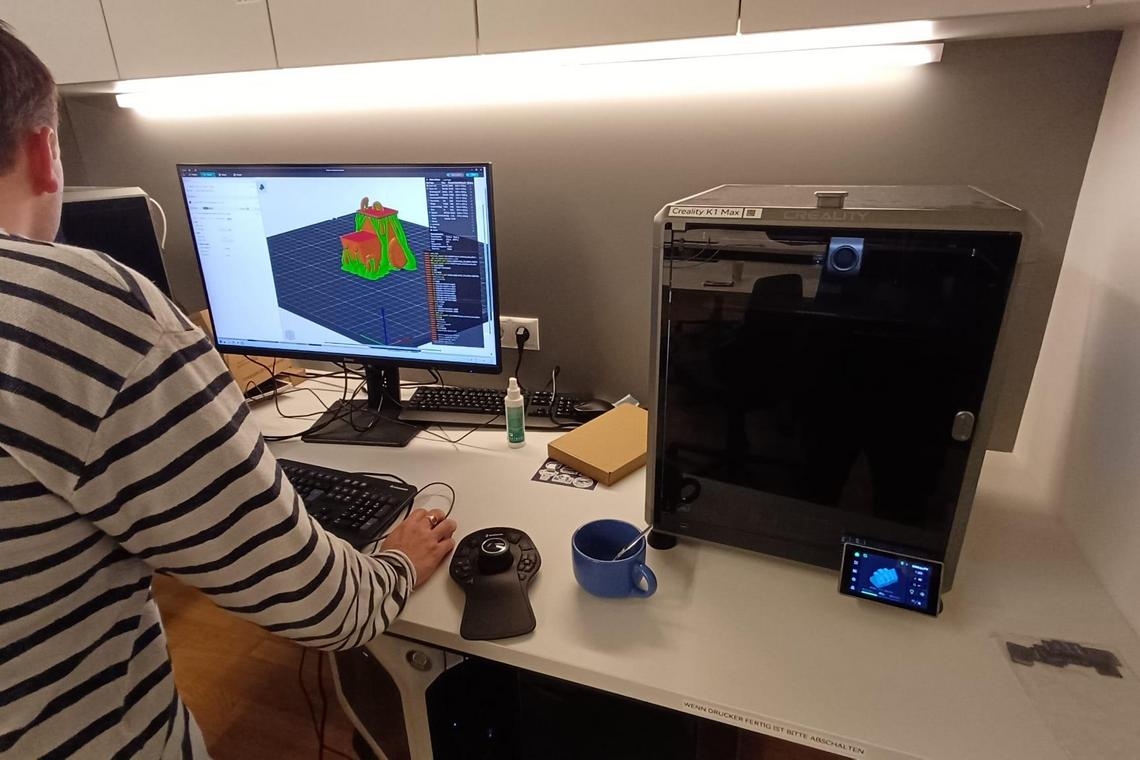
Following the simulation, students continued their learning at the IMC Digilab as part of the course Digital Technologies by Michael Reiner. They explored virtual reality environments and used 3D printing equipment to produce their own previously designed models.
By combining strategic simulation with hands-on technology exploration, IMC Krems enables students to connect analytical thinking, digital tools and real-world business challenges in a meaningful way.