
IMC Krems and VERKEHRSBUERO, Austria’s leading tourism group, have entered into a strategic partnership to drive innovation in tourism and to strengthen the transfer of knowledge between the university and the industry in the long term.
News
Knowledge transfer between higher education and the industry: VERKEHRSBUERO and IMC Krems are shaping the future of tourism
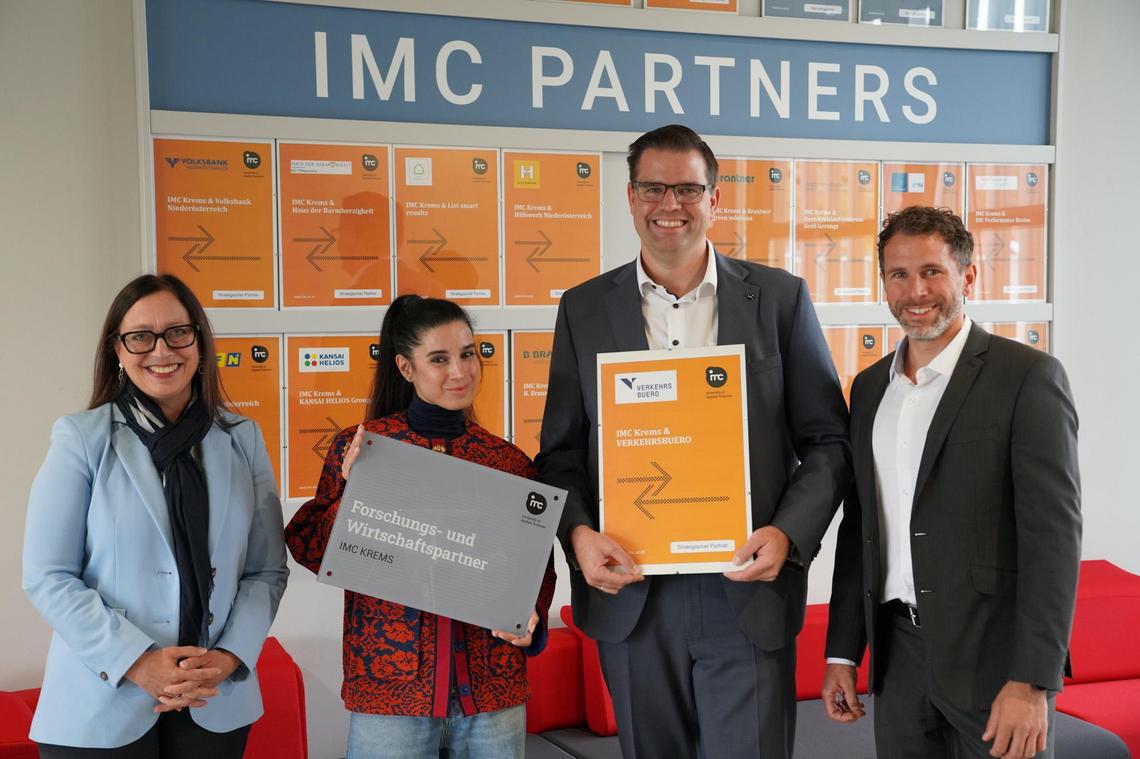
The collaboration focuses on future-oriented topics such as artificial intelligence, the digital customer experience, sustainable hospitality concepts and the development of new solutions for the travel industry of tomorrow.
By signing a Memorandum of Understanding (MoU), both partners are laying the foundations for a long-term collaboration in research, teaching and applied practice. The aim is to familiarise students at an early stage with the challenges and opportunities of a rapidly changing tourism industry and to jointly develop innovative responses to current issues facing the sector.
The partnership was preceded by intensive discussions and joint planning efforts. On the part of VERKEHRSBUERO, Djeiran Malek, Group Director of Marketing & Communication, and Stella Galoppi, Project Manager & Lead Corporate Innovation | Corporate Strategy, were particularly instrumental in shaping the collaboration. On the part of IMC Krems, Claudia Bauer-Krösbacher, Head of the Institute of Tourism and Marketing at IMC Krems, was among those involved in developing the future areas of cooperation.
For Birgit Wallner, CEO of VERKEHRSBUERO, AI and the future of travel are among the company’s key strategic areas of development. “The tourism industry is undergoing constant technological change. Artificial intelligence, data-driven services and digital applications are transforming the way people plan, book and experience travel. This makes close collaboration between academia and industry all the more important. Together with IMC Krems, we are creating a framework in which new ideas can emerge, innovations can be tested and solutions to tomorrow’s challenges can be developed. At the same time, we are investing in the training of those talented individuals who will actively shape the future of tourism,” says Birgit Wallner, Managing Director of VERKEHRSBUERO.
The aim of the partnership is to further expand the transfer of knowledge between the university and the industry and to offer students the opportunity to engage with current challenges and future issues in the tourism and hospitality sector whilst still studying. At the same time, companies benefit from new perspectives and innovative approaches from academia and teaching.
Key research areas: AI and digital travel experiences
A primary focus of the collaboration is the development of practice-oriented research topics for bachelor’s theses. Currently, the partners are examining, amongst other things, how artificial intelligence can support travel advice in the future and which digital technologies can further enhance the travel experience throughout the entire customer journey.
The focus is on solutions that enable individualised and personalised travel experiences whilst simultaneously making processes more efficient. The aim is to relieve staff of routine tasks and create more scope for those tasks that make a difference: personalised advice, excellent service and the creation of exceptional holiday experiences.
Sustainable solutions for the hospitality sector
Another potential area of collaboration is the topic of food waste management. IMC Krems has already developed a comprehensive concept for this, which involves students conducting scientific research into various issues. Together with experts from VERKEHRSBURO, they will assess which topics are particularly relevant to the company’s hospitality division and how innovative approaches can contribute to the sustainable development of tourism offerings.
Practical teaching and direct knowledge transfer
Numerous activities are also planned in the areas of teaching and knowledge transfer. For instance, experts from companies within the VERKEHRSBUERO Group are set to appear as guest lecturers in various courses at IMC Krems in future. This will give students direct insights into current developments in the tourism, hospitality and travel sectors, as well as into the challenges and opportunities facing one of Austria’s leading tourism companies.
Potential for more
Further opportunities for collaboration are already in the pipeline. These include joint projects in the field of experience design, as well as the development of a study on the travel behaviour of Austrians. Both partners see great potential in addressing current industry issues together with students, researchers and business representatives, thereby creating sustainable added value for all involved.