
On World Tourism Day, alumni Claudia and Lisa Bässler reflect on how tourism, education and career paths have evolved over the years. For more than three decades, IMC Krems University of Applied Sciences has combined international perspectives, practical relevance, sustainability and applied research in an industry that is constantly evolving.
Story
International tourism education since 1994: How IMC Krems shapes generations of tourism professionals
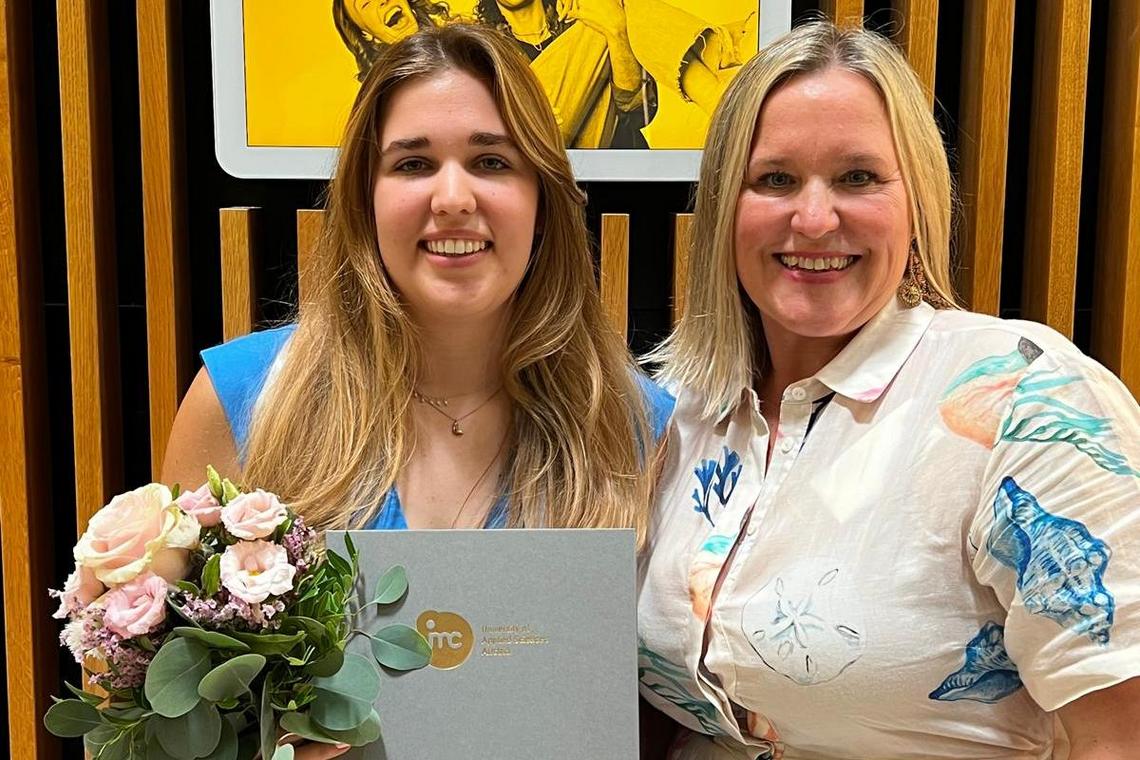
When a mother and daughter choose the same degree programme, there is usually more behind it than coincidence. The story of Claudia and Lisa Bässler is not only about two educational journeys, but also about the evolution of an industry that has changed profoundly over the past decades. Almost 30 years lie between Claudia Bässler’s graduation in 1998 and her daughter Lisa’s graduation in 2026. Today, digitalisation, sustainability, climate change and changing traveller expectations shape an industry that is continually adapting.
IMC Krems has been accompanying this transformation since its beginning in 1994. With its Tourism and Leisure Management programme, the university established the first English-taught degree programme in the Austrian university of applied sciences sector. Internationality has therefore been part of IMC Krems’ DNA for more than three decades.
Empowering students to actively shape the future of tourism
“The story of Claudia and Lisa Bässler is a wonderful example of how tourism connects people, cultures and generations. What particularly pleases me is that it also highlights the long-term connection our graduates maintain with IMC Krems. Nearly three decades of tourism development separate Claudia Bässler’s graduation from that of her daughter Lisa. Yet core values such as internationality, practical relevance and a passion for people and cultures have remained unchanged. At the same time, this cross-generational portrait illustrates how dynamically our industry continues to evolve. As a university, our ambition is not only to prepare students for today’s challenges but also to empower them to actively shape the future of tourism. The fact that mother and daughter chose the same degree programme is a particularly rewarding testament to the lasting quality and relevance of our education,” says Claudia Bauer-Krösbacher, Head of the Institute of Tourism.
Our interview with Claudia (mother) and Lisa Bässler (daughter)
Claudia, what originally motivated you to study tourism?
What attracted me most to tourism was its international character and the wide range of opportunities it offered. It combines business topics with different cultures and involves working with people from all over the world. I found that especially exciting. In addition, the programme at IMC Krems was still very new at the time and strongly practice-oriented. It was exactly this combination that appealed to me.
Lisa, why did you also decide to study tourism?
I believe my decision to pursue a career in tourism is closely linked to the way I grew up. Travelling was always an important part of family life. We explored many countries and cultures and were constantly looking for new experiences. From an early age, I realised how important travel was to me.
Before starting university, I attended a higher vocational college specialising in tourism and hotel management. Studying tourism at university was therefore a natural continuation rather than a spontaneous decision. Travel may have been what first drew me to tourism, but I stayed for many other reasons. What fascinates me most is the diversity of the industry and the opportunity to engage with different people, cultures and ways of life. For me, tourism brings together travel, gastronomy, culture, events, experiences and internationality. My mother has also worked in the tourism sector, so the industry has always been part of my environment.
Claudia, which subjects were the main focus of your studies?
We focused extensively on tourism management, destination marketing, as well as hotel and event management. Naturally, the programme also included business fundamentals. What I remember most vividly are the practical projects with regional partners. They allowed us to experience early on how theoretical knowledge can be applied in real-world situations.
Lisa, which topics shape the programme today?
What I find particularly exciting is how broad the programme is. Essentially, it is a business degree with a clear tourism focus. Alongside core business subjects such as accounting, economics, statistics, marketing and human resource management, we also study destination management, hospitality, culture, event management and experience management. This provides a comprehensive understanding of the industry and helps students appreciate how all these different areas interact.
Claudia, what changes have stood out most to you in tourism over the past decades?
The impact of digitalisation has been the most noticeable. Today, almost everything happens online, from travel planning and booking to post-trip reviews. At the same time, travellers are placing much greater emphasis on sustainability and authentic experiences. Overall, the industry has become faster and more transparent, and it is now much easier to compare offers.
What has surprised you most about this development?
What surprised me most was how quickly guests’ expectations and preferences changed. Comfort and price are still important, of course, but many travellers are increasingly seeking individual, sustainable and memorable experiences. At the start of my career, I would never have expected this shift to happen so rapidly.
Lisa, which changes do you already observe in travel behaviour today?
I believe travel behaviour is changing in several ways. Sustainability and climatic conditions increasingly influence decisions about when and where people travel. At the same time, expectations of travel experiences are evolving.
We are moving more towards an experience economy. It is no longer only about visiting a place but about the experiences people have there and the personal meaning they derive from them. Travellers are increasingly looking for individual, authentic and unique experiences. As a result, personalisation is becoming more important. People want to tailor their journeys to their own interests, whether that involves gastronomy, culture, sport, adventure or other personalised activities.
However, I do not believe that people fundamentally want to travel less. Rather, the perception of what makes a journey valuable is changing. Quality and personal significance are becoming more important than ever.
Lisa, what role do sustainability and climate change play in education today?
Sustainability and the effects of climate change are highly visible throughout the programme. We have studied subjects such as Sustainability and Ethics in Leadership, Sustainability in Tourism and Current Issues in Tourism, where these topics are addressed directly.
At the same time, sustainability is integrated into many other subjects. We regularly discuss the long-term effects of tourism development on destinations, businesses, the environment and local communities. I think it is important that sustainability is not treated as an isolated specialist topic but is considered across all areas of tourism.
Claudia, which challenges would have been difficult to imagine during your studies?
I could hardly imagine how significantly climate change and pandemics would influence the tourism industry. Nor could I have predicted the enormous importance of major booking and intermediary platforms. Both developments have fundamentally transformed the sector.
Lisa, how are the impacts of heatwaves and extreme weather on destinations discussed in your studies?
We increasingly discuss how climate change is affecting tourism and individual destinations in very concrete ways. Heatwaves, extreme weather events and other climatic changes influence when and where people travel and whether destinations remain attractive during certain seasons in the long term.
This raises questions such as whether traditional summer seasons will remain viable or whether travel demand will increasingly shift towards spring and autumn. As a result, destinations need to rethink parts of their infrastructure and tourism offerings.
Claudia, which skills acquired during your studies still support you today?
Above all, project management, service-oriented thinking and the ability to organise complex processes. I still rely on these skills regularly. While the professional environment has changed considerably, many of the foundations I gained during my studies remain highly valuable today.
Which abilities are more important today than at the start of your career?
Flexibility and a willingness to learn are particularly important today. Digital competencies, such as online marketing and data literacy, have also become essential. Nevertheless, empathy, strong communication skills and an understanding of people’s needs remain just as important. Tourism will always be about people and their experiences.
Lisa, which skills do you believe will be most important for the future of tourism?
I believe the ability to embrace change will be crucial. Climate change, digitalisation, artificial intelligence and changing traveller expectations will all have a major impact on tourism.
Alongside subject knowledge, flexibility, critical thinking, creativity and adaptability will become increasingly important. At the same time, tourism remains a deeply human industry. Communication skills, empathy and intercultural competence will therefore continue to play a central role.
Claudia, how do you imagine the tourism industry in ten years’ time?
I believe tourism will be shaped even more strongly by sustainability, technology and the impacts of climate change. Some destinations will have to adapt significantly, and traditional travel seasons may shift.
At the same time, I do not believe technology will replace the human element of tourism. People will continue to travel to discover other cultures, create meaningful experiences and spend time with others. In an increasingly digital world, this personal and authentic aspect may become even more valuable.