
Story

International experience in Paris for IMC Krems Management students

Blended Intensive Programmes at IMC Krems

Gaining international experience is widely recognised as a valuable part of higher education and an important asset for future careers. However, for students who study part-time alongside their professional responsibilities, spending an extended period abroad is often difficult to realise.

The master degree programme Management at IMC Krems addresses this challenge with tailored formats such as Blended Intensive Programmes (BIPs), developed in cooperation with international partner universities. These programmes make it possible to combine professional commitments with meaningful international experience.
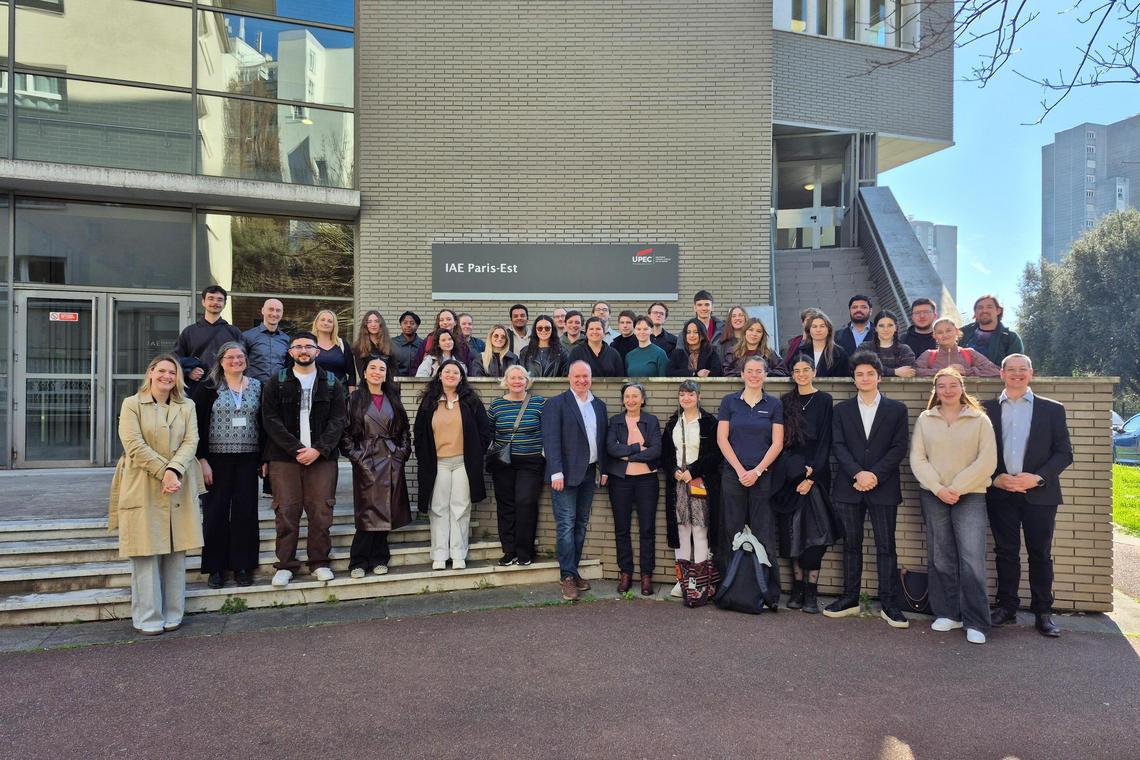
Students on the master degree programme in Management
At the beginning of March, students on the master degree programme in Management took part in a BIP in collaboration with IAE Paris Est in France.

At the beginning of March, students on the master degree programme in Management took part in a BIP in collaboration with IAE Paris Est in France. Instead of spending an entire semester abroad, participants joined an intensive one-week on-site programme in Paris, complemented by virtual preparation and follow-up phases. Upon completion, students receive a certificate and can have selected courses credited within their degree programme.

Learning leadership through interactive scenarios

The BIP “Tabletop Role Playing Games and Managerial Skills” focused on developing soft skills in management. Using game-based scenarios, students explored real-life management situations such as leadership, negotiation and decision-making in a creative and practical way.

Working in international teams, participants were encouraged to take on different roles, collaborate across cultures and navigate complex challenges together. This hands-on approach provided a dynamic learning environment that goes beyond traditional classroom settings.

Student perspectives: Experience in action

Paul Kressnik, with a background in health-tech and medical device development, described the experience as “a surprisingly accurate mirror of real team dynamics”. For him, working in an international group meant communicating more deliberately, rethinking assumptions and making decisions under pressure.

Petra Nagl, who combines her studies with her role as a radiology technologist at the University Clinical Center Graz, approached the programme with an open mindset. This led her to co-create her own role-playing game together with fellow students from across Europe.

Both highlight the value of working in diverse teams, where different perspectives and working styles create new ways of thinking and problem-solving.

Building essential skills for future leadership

The programme strengthened key competencies such as adaptability, empathy and active listening - all essential skills for leadership in today’s complex working environments. At the same time, it encouraged students to step out of their comfort zones and engage with new perspectives.

As programme director Alfred Radauer explains, international experience combined with intercultural competencies and soft skills development is of great importance for future leadership roles. The integration of such formats into the curriculum represents a significant added value for students.

Flexible international experience within the curriculum

A key feature of the BIP is its integration into the curriculum. In the second semester, students can choose to apply for the programme or complete the “Personal Skills Lab” on campus in Krems, with the BIP being credited accordingly.

The programme may also be supported through Erasmus+, helping to keep costs low, while requiring only a short stay abroad. As the first BIP embedded in the Management curriculum, this format marks an important step towards expanding flexible international learning opportunities for students.

Management