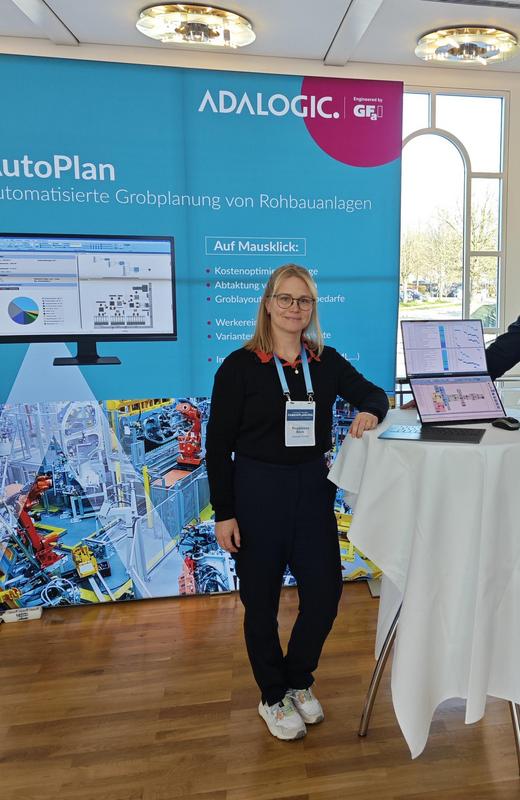
New technologies are not born in a company’s boardroom. They often emerge years earlier in laboratories and research institutions. The real challenge begins afterwards: how can innovative developments make their way into practical application? This is precisely where IMC Krems alumna Magdalena Böck comes in. As CEO of Berlin-based Adalogic GmbH, she helps turn research into tangible solutions for businesses.
Story
How research finds its way into practice
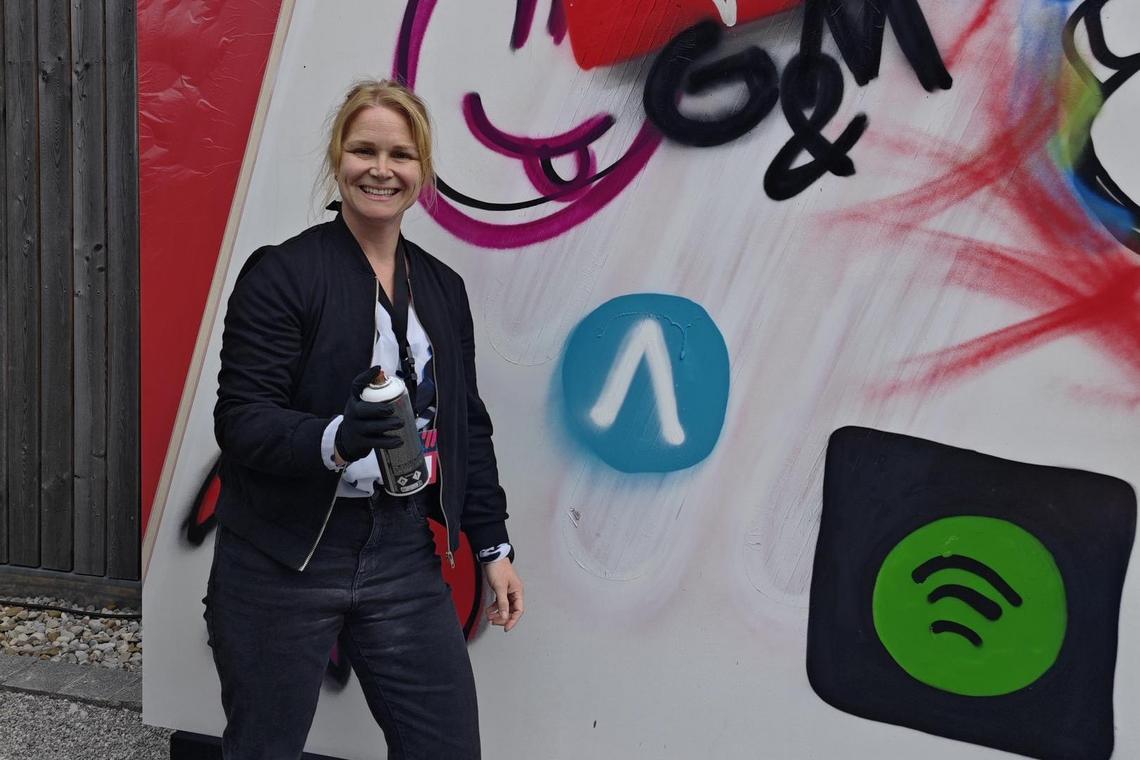
When Magdalena Böck talks about innovation, she does not begin with artificial intelligence, digitalisation or emerging technologies. She starts with applicability.
Many research outcomes hold enormous potential but never make the leap into the marketplace. This is exactly where her work begins. As CEO of Adalogic GmbH, she oversees the transformation of scientific developments into market-ready products and solutions for businesses. Her particular focus lies on Germany’s small and medium-sized enterprises, many of which do not have their own research departments but still need to remain innovative and competitive.
“Research is not an end in itself. It only creates real value when businesses and society can genuinely benefit from it,” says Magdalena Böck, describing the conviction that shapes her daily work.
From IMC Krems to Berlin
After completing the diploma programme Export-oriented Management (now International Business and Economic Diplomacy) at IMC Krems, the Upper Austrian native moved to Germany to pursue her career.
Today, she lives in Berlin with her family and considers the city her home. She particularly values Berlin-Adlershof Science and Technology Park, one of Europe’s leading innovation hubs, known for its unique combination of research institutes, technology companies and start-ups. Both Adalogic and its parent organisation, GFaI e.V., are based there.
Her own career path led her through international sales and business development roles before she took the helm at Adalogic. From an early stage, she operated in an environment where technological innovation, international markets and commercial implementation were closely interconnected. Since 2021, she has been responsible for the company’s overall management and strategic development.
Building a bridge between research and business
Adalogic is a wholly owned subsidiary of the Society for the Promotion of Applied Computer Science (GFaI e.V.), one of Germany’s largest non-university research organisations in the field of applied computer science. For more than three decades, GFaI has been developing technologies and solutions for a wide range of industrial applications.
Adalogic’s mission is to translate these research outcomes into products and applications that businesses can use directly. Its portfolio includes solutions in robotics, industrial image processing, materials analysis, production planning and knowledge management. “Many companies lack the resources and time to conduct their own research. We help transform scientific findings into practical solutions that create immediate value and solve real-world challenges.”
Magdalena Böck believes that this role as an intermediary between science and industry has never been more important. Public funding is becoming scarcer, innovation cycles are shortening, and international competitive pressure continues to increase. As a result, ensuring that research outcomes can be transferred into practical applications quickly and effectively is more important than ever.
Innovation requires more than good ideas
When innovation is discussed, attention tends to focus on research and development. Far less visible is the transfer process between scientific discovery and commercial implementation. Yet this is precisely the area gaining importance. Within Germany’s research and innovation landscape, knowledge and technology transfer are increasingly recognised as essential for ensuring that scientific advances reach businesses and society.
Magdalena Böck encounters this challenge every day. “Developing an outstanding technology is not enough. You also need to understand which problem it solves, what value it creates and how it can be integrated into existing processes.” At times, this also means convincing stakeholders, building new partnerships and continuously advocating for the importance of research and innovation.
Thinking internationally and making complexity understandable
The ability to bring together different perspectives has accompanied Magdalena Böck ever since her studies. She credits the international orientation of IMC Krems, working with people from different cultures and the combination of business thinking with practical education as valuable foundations for her professional life.
Equally important is her ability to communicate complex topics in an understandable way, a skill that has proved essential both in international sales and at the intersection of research, development and business. “You do not need to know everything yourself. But you do need to know how to bring together the right people so that they can develop solutions collectively.”
Our interview with Magdalena Böck
Magdalena, many organisations talk about innovation. Where do you currently see the greatest challenge?
I believe the challenge lies in recognising that innovation cannot simply be declared. You cannot decide to be innovative from one day to the next and expect results to follow automatically. In reality, innovation is the outcome of many different factors. Above all, it requires patience. Usually, a tremendous amount of patience. In our economically driven world, that may be the most difficult ingredient of all: allowing people the time to work on something that is not immediately finished and profitable. Something that may never generate a return, but if it does, the impact can be significant.
There is also a tendency to associate innovation only with major breakthroughs or revolutionary discoveries. In doing so, we often overlook the fact that innovation can happen through many smaller steps and improvements. I believe that the greatest challenge is having the courage to start something even when, at first, there are more reasons why it might fail than why it might succeed, and then continuing, nonetheless.
You work every day at the intersection of science and business. What fascinates you most about it?
The type of research carried out at GFaI is, in many ways, a form of product development. That is something I truly enjoy. It is not just about selling a product. It is about actively helping to shape what that product ultimately becomes. That is what makes this intersection so exciting. As someone with a business background, which has shaped my career since my time at business college, I approach challenges very differently from the researchers I work with every day. Researchers often start with the question, “What is technically or scientifically possible?” My perspective is more focused on, “What does the market need and what works commercially?” Bringing together these different ways of thinking, understanding perspectives that are fundamentally different and still creating a successful product together, is what I find most fascinating.
What does Adalogic do?
Adalogic transforms results from applied research into market-ready products and solutions. The company analyses research outcomes, market potential and specific customer requirements. Based on this, it develops product concepts and market positioning strategies. Adalogic also takes responsibility for marketing, sales and, where required, business development. In this way, the company brings innovative solutions to market and makes them accessible, particularly for small and medium-sized enterprises. Its core areas of focus are digitalisation, automation and process optimisation.
Areas of application
- Robotics and automation
- Production and factory planning
- Industrial image processing
- Materials and quality analysis
- Knowledge management and fault diagnostics