
Julia Mayrhofer completed the Tourism and Leisure Management degree programme at IMC Krems and went on to launch an impressive international career in tourism. Today, the IMC alumna is making a lasting impact on the Dutch tourism landscape.
Story
Global footprints of IMC alumni
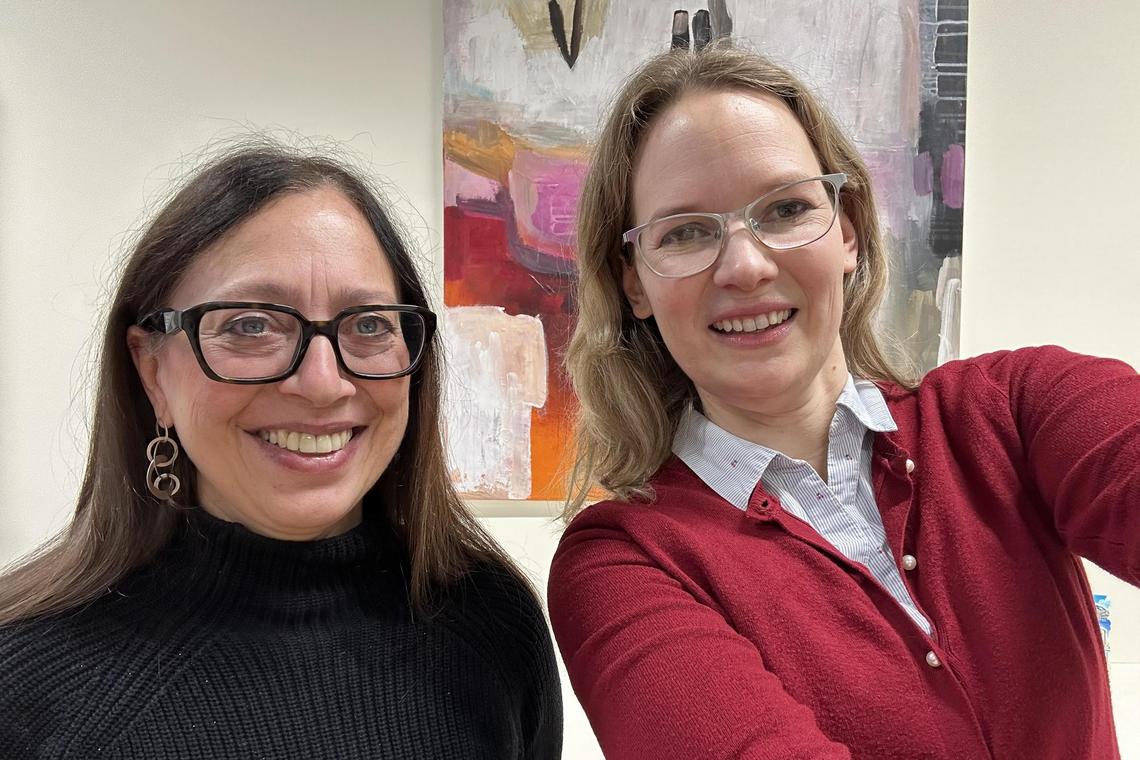
Julia Mayrhofer currently teaches Revenue Management & Entrepreneurship at Hotelschool The Hague in the Netherlands. In doing so, she not only shares her own professional experience but also passes on IMC know-how to future tourism experts. In addition, she is co-founder of Hotel Employee Rate, an incentive travel programme for hotel employees, and serves as consulting CEO of Key Hotels and Resorts, a leading provider of solutions for the hospitality industry.
Revenue maximisation in the hospitality industry
After completing the (then) four-year Tourism and Leisure Management degree programme at IMC Krems, Julia Mayrhofer progressed through various career stages in Vienna, the Cayman Islands and Florida (USA). She spent eleven years alone as Director of Revenue Management for the Caribbean and Mexico with one of the world’s most prominent hotel groups.
Since 2017, she has been offering her expertise to major players in the hospitality industry, operating from the Netherlands. Her focus is on revenue management – the discipline concerned with ensuring that the right product is sold at the optimal price, at the right time, to the right customers and via the most suitable distribution channel. In essence, it is a concept for revenue optimisation through dynamic pricing.
Erasmus guest lecture at IMC Krems
As an IMC alumna, Julia Mayrhofer is a valuable ambassador who communicates internationally and to a broad audience just how forward-looking the education at our University of Applied Sciences is. As an Erasmus guest lecturer, she returned temporarily to her alma mater and enjoyed the exchange of ideas and networking at IMC Krems.
Particularly appreciated was the professional exchange with Prof. (FH) Mag. Claudia Bauer-Krösbacher, Head of the IMC Institute of Tourism and Programme Director Tourism and Leisure Management, focusing on current industry trends and different teaching approaches. Julia Mayrhofer delivered a highly regarded workshop entitled “Revenue Management in the Hospitality Industry”. Students were able to deepen their understanding of key concepts and successfully apply them in a realistic simulation.
IMC Krems is delighted with this successful example of international collaboration that ideally combines teaching, learning and networking. Further collaborations of this kind will follow.
Four questions for Julia Mayrhofer – four answers
What does revenue management mean in the hotel business? What is it specifically about?
For me, revenue management in hotels means making daily decisions to achieve the best possible return from a limited number of rooms. Prices and availability are flexibly adjusted to demand, booking behaviour and market conditions. In practice, this involves analysing data and identifying trends at an early stage. The goal is not simply full rooms, but the optimal balance between occupancy, revenue and profitability. Not every distribution channel is equally valuable – and this is precisely what needs to be optimised consistently.
What are currently the most significant industry trends in this field?
Several defining trends are currently emerging in hotel revenue management. AI-supported pricing and revenue management systems are increasingly taking over forecasting and pricing decisions, enabling fast, data-driven responses to market developments. This goes hand in hand with personalised pricing and the stronger integration of real-time market data: competitor, event and macroeconomic data are automatically incorporated into pricing strategies.
At the same time, the profitability of distribution channels is receiving greater attention. Direct bookings continue to be among the most valuable channels, while booking platforms and other intermediaries, despite their reach, are used selectively and strategically due to high commission costs.
You teach yourself today. Which topics are particularly important to you?
In my teaching, I place particular emphasis on content that prepares students in a practical and realistic way for today’s hospitality and tourism sector. Curricula are specifically adapted to strengthen data-driven decision-making, technological competence and profitable channel management. The aim is for students to enter the industry with a clear understanding of current tools, mindsets and economic interrelationships.
At the same time, I place great importance on students being able to act creatively and in a solution-oriented manner. An entrepreneurial mindset should enable them to recognise opportunities, solve problems creatively and make independent decisions – skills that are just as crucial in a dynamic working environment as technical expertise.
How did IMC Krems influence your career path? Which aspects of teaching were particularly useful for you?
IMC Krems prepared me very well for my career. The well-balanced curriculum combines solid business fundamentals with contemporary topics. Particularly valuable were the lecturers from industry who enriched the courses with real-life examples and case studies – making theory tangible and directly applicable. This combination of specialist knowledge, practical relevance and strategic thinking significantly facilitated my entry into the hospitality industry and played a decisive role in supporting my professional development.