
Heavy helmets, night-vision devices and ballistic visors: during training and deployment, soldiers carry a considerable load – in the truest sense of the word. The neck region in particular is exposed to extreme strain. To address these challenges from a scientific perspective, the Theresian Military Academy and IMC Krems are collaborating on a joint research project entitled the Tactical Neck Protection Project.
Press
Research for Enhanced Operational Readiness and Soldier Health
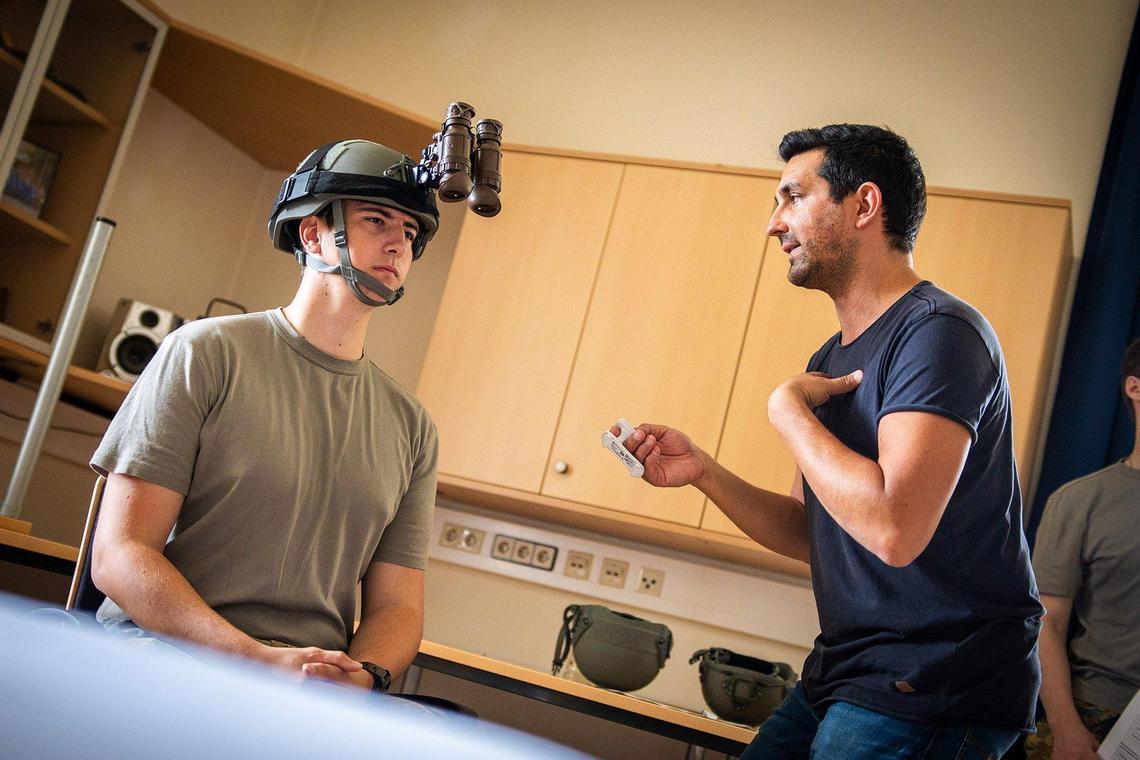
The interdisciplinary research project, led by Prof. (FH) Dr Andreas Lichtenwörther, MSc, BSc, Academic Director as well as Head of the Institute and Degree Programme in Physiotherapy at IMC Krems, investigates the physical stresses placed on the necks of military cadets and, based on these findings, develops an innovative prevention programme aimed at strengthening neck musculature.
Objective: Prevention through scientifically sound training
The aim of the project is to develop an easy-to-apply, scientifically validated training programme that can be integrated into military education. This programme is intended to sustainably improve soldiers’ neck health, prevent injuries and, in the long term, enhance operational readiness.
“Our research aims not only to understand the stresses soldiers are exposed to, but also to develop concrete, practical solutions,” explains Lichtenwörther from IMC Krems. “By combining physiotherapeutic expertise with military know-how, we are creating a training concept that has a direct impact within training and strengthens the health of the troops.”
From analysis to prevention – a structured research approach
The project is divided into several phases:
- Assessment of the current situation: In the current data collection phase, neck mobility, endurance and maximum strength are measured under realistic conditions – wearing a combat helmet and mounted night-vision goggles.
- Development of a load model: Based on these data, a physiological model is created that precisely reflects the specific demands placed on the neck in a military context.
- Prevention programme: A training programme is then developed and evaluated, designed for easy integration into officer training.
- Evaluation of effectiveness: The effectiveness of the training programme is assessed by comparison with the initial baseline measurements.
Practice-oriented research with high relevance
The results are intended not only to benefit the military cadets at the Theresian Military Academy, but also to serve as a model for military training as a whole. Preventive training can reduce complaints, increase resilience and sustainably improve overall operational capability.
“The Tactical Neck Protection Project is an excellent example of how interdisciplinary collaboration between science and practice can lead to tangible improvements,” emphasises Lichtenwörther. “Research at IMC Krems is practice-oriented, evidence-based and focused on real-world challenges – with the aim of sustainably promoting health and performance.”
About the project
The Tactical Neck Protection Project is a cooperation between the Institute for Officer Training at the Theresian Military Academy and IMC Krems. It brings together expertise in military science and physiotherapy to develop practice-oriented prevention strategies for military training.