
From Krems to the international biotech world: how IMC Krems alumnus Stefan Lichtenberger, now Clinical Development Quality Lead, shapes clinical trials and contributes to programme development through the Biotech Alumni Board.
Story
Career compass biotech: Quality creates the edge
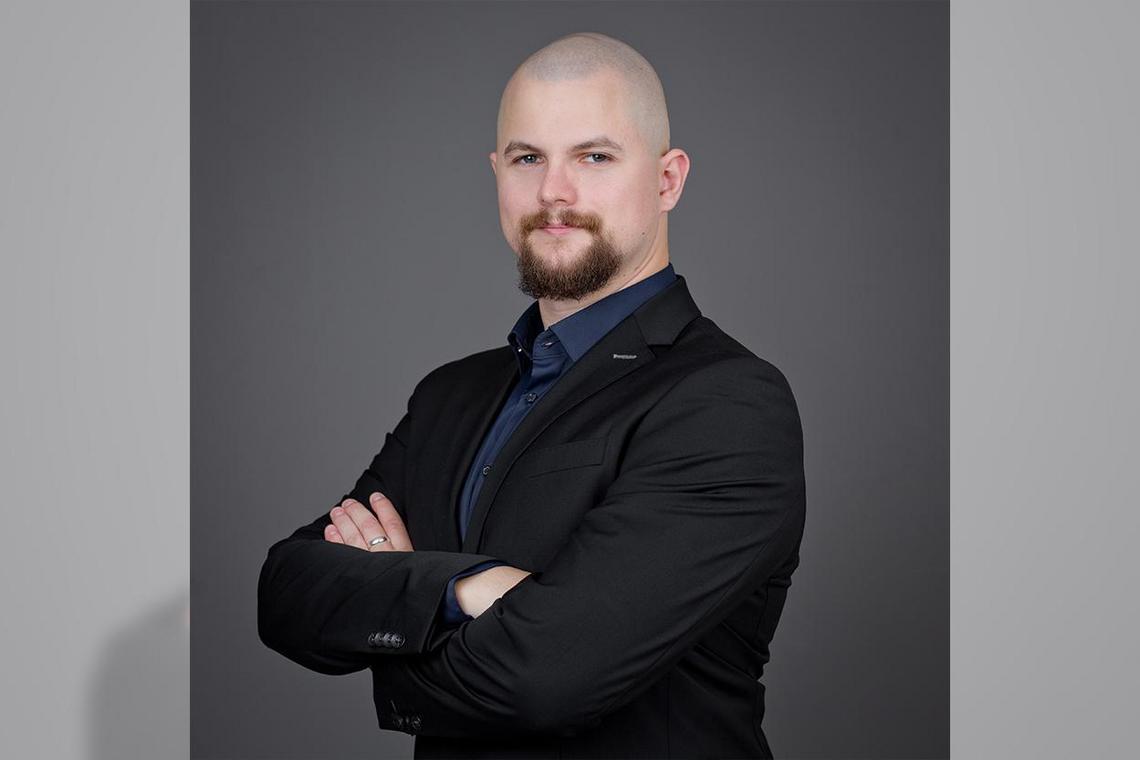
Stefan Lichtenberger completed both the bachelor and master degree in Medical and Pharmaceutical Biotechnology at IMC Krems. Today, he works as Clinical Development Quality Lead at Debiopharm in Lausanne, where he is responsible for ensuring the highest quality and compliance standards are met clinical trials. His professional journey – with positions at Debiopharm (CH), BioNTech (DE), Johnson & Johnson (DE) and Bio-Techne (UK) – illustrates the international demand for the expertise of IMC Krems graduates.
Beyond his professional role, Stefan is also dedicated to strengthening links between academia and industry. As a member of the Biotech Alumni Board, he contributes his experience and network on a voluntary basis. Together with the institute’s leadership, he develops new ideas for programme advancement and ensures that alumni perspectives from industry are actively considered.
“The Alumni Board is a valuable bridge between university and professional practice,” Stefan emphasises. “It ensures that our degree programmes remain state-of-the-art – scientifically and in terms of industry requirements.”
The Institute of Biotechnology at IMC Krems has long been recognised as a pioneer in practice-oriented education and applied research. Close ties with industry, international cooperation and the active involvement of alumni such as Stefan Lichtenberger play a decisive role in maintaining and further strengthening this position.
Behind the scenes with Stefan Lichtenberger
Your career has taken you from Krems to international positions and now to Lausanne. Looking back, which experiences from your studies at IMC Krems have had the greatest impact and continue to influence you today?
Looking back, several moments from my time at IMC Krems have shaped me profoundly. Firstly, I owe much to Prof. Christian Klein, at the time our teacher for bioinformatics. He instilled in us the following approach: “Learn how to learn. Understand how to process information and where to find it. Rote memorisation is a thing of the past.” In quality management, with its multitude of local, national and international regulations, such an approach is essential.
Secondly, my bachelor internship helped me to rule out an academic career and a PhD for myself. Having a clear goal for my career path simplified many decisions, even if this goal can evolve over time.
Prof. Andreas Eger also left an impression with his tongue-in-cheek remark at the beginning of his third-semester lecture. He predicted that about half of us would end up in either marketing or quality management. At the time we laughed, though nowadays it makes me smile, because he was right. My first role after graduation was in sales, and although it took me four years to enter quality management, it was still close enough.
However, perhaps the most decisive influence came from Dr Baumgartner of AGES, who left an impression simply by describing the work of inspectors and auditors. That was the moment it clicked for me – I knew that was what I wanted to do. It took nearly four years after my master degree, but eventually it became reality.
As Clinical Development Quality Lead, you operate in a highly regulated environment. How do you manage to balance patient safety, scientific excellence and business demands?
The key is, that as clinical quality management, my team and I serve as partners of the clinical study teams. It feels like an uphill battle sometimes, as Quality management is frequently perceived as a sort of “police” or “complicators”. The people who always say no, create more paperwork and hide behind regulations and paragraphs.
But quality management shares the same goal: to deliver safe products with real benefit for patients, grounded in sound scientific work. Quality is part of the normal job – it is not limited to one department but is the responsibility of every single employee. We are simply the enabling partners who ensure it is implemented in the best possible way.
Once this mindset is embraced and the added value is clear, terms like “audit”, “deviation” or “risk management” lose their intimidating connotations. Yet in the clinical context, the top priority will always be the trial participants.
You are an active member of the Biotech Alumni Board at IMC Krems. What motivates you to dedicate yourself to this voluntary role – and what added value do you see for students, alumni and the university?
During our studies, we benefited from a strong combination of academic fundamentals and industry-relevant training. This was complemented by an excellent practical laboratory and highly competent, approachable lecturers.
Even back then I experienced firsthand how alumni and senior students passed on their knowledge to younger cohorts. Be it through mentoring, practical advice for studies and internships, or even entire guest lectures. Personally, I owe a lot to such input, whether feedback on my first CV or the opportunity to secure an internship in Sweden.
It is therefore only natural for me to follow this example and continue the cycle. Students gain valuable insights into parts of the industry they might not otherwise explore. The university, in turn, benefits from continuous feedback from alumni on industry trends and curriculum development. A true “win-win-win” for everyone involved.
Medical and Pharmaceutical Biotechnology bachelor degree programme
Medical and Pharmaceutical Biotechnology master degree programme