
News

Sharing Care Work More Equitably: What Motivates Men to Take on Caring Responsibilities

Through her doctoral research project CaringPartners, researcher Evelyn Haberl is investigating why men take on responsibility for caring for family members – and how care work can be organised more sustainably and equitably.

When people require support in their daily lives, family members play a crucial role – whether with household tasks, administrative matters, or attending medical appointments. Family caregiving is indispensable, yet it remains unevenly distributed: in Austria, the majority of unpaid care work is still carried out by women.

Why, then, do some men become actively involved in caring for relatives? What factors encourage this engagement? And under what circumstances are they willing to assume caring responsibilities? These are the questions at the heart of the doctoral research project CaringPartners, led by Evelyn Haberl, researcher at the Institute of Therapy and Midwifery Sciences at IMC University of Applied Sciences Krems (IMC Krems).
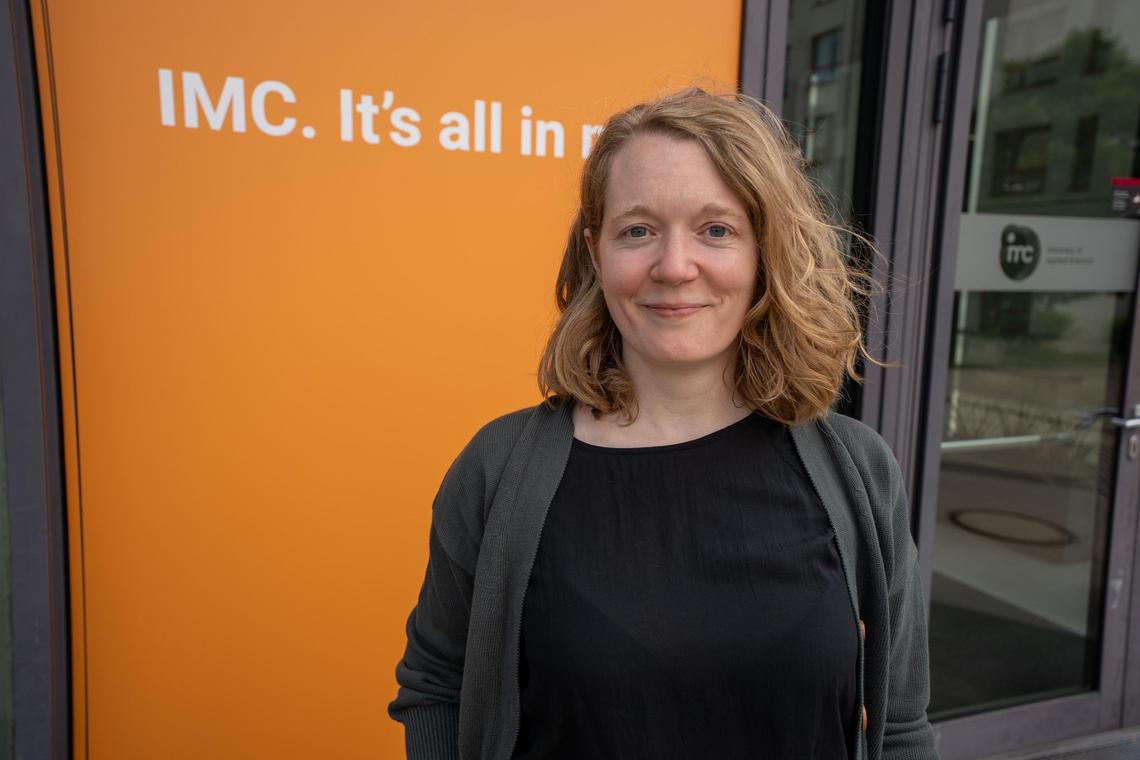
 

Through the CaringPartners research project, Evelyn Haberl examines the factors that motivate men to assume family caregiving responsibilities and the conditions that support a more equitable sharing of care work.

“Family carers make an enormously important contribution to our society,” says Haberl. With increasing life expectancy and growing demand for support, family-based care is becoming ever more significant, while healthcare systems in many places are reaching their limits. It is therefore essential to create conditions that enable people to provide care at home without jeopardising the health and well-being of family carers themselves.

Men in Family Caregiving: What Motivates Them?

At the centre of her doctorate is the project CaringPartners – Developing a Culture of Care: Millennial Men’s Willingness to Provide Family Care in Austria. The project deliberately adopts a strengths-based approach: it focuses on men who already assume caring responsibilities and explores what can be learned from their experiences. Haberl analyses the factors in their life histories that have contributed to their willingness to take on this role.

A key element of the project is its intergenerational perspective. In addition, Haberl examines how men from the Millennial generation (born between 1981 and 1996) view the prospect of taking on caring responsibilities in the future. In the final phase of the project, men from different age groups and life situations will work together in workshops to develop recommendations for a fairer distribution of care work.

A Journey into Research – By an Indirect Route

After completing her secondary education, Haberl initially began studying at the Vienna University of Economics and Business (WU Vienna). She subsequently changed direction and trained in interior design and furniture making. Personal experiences with support needs sparked her interest in accessibility and care work. This interest in the health sector later led her to occupational therapy – and ultimately to a career in research.
“I love learning new things and getting to the root of problems,” she explains when describing her motivation.

A decisive step in her journey was the Master’s degree programme Applied Health Sciences at IMC Krems. There, she discovered her enthusiasm for research and for academic dialogue on societal issues relating to health and care provision. During this period, she was involved in the research project Collaborative Research on Occupational Balance (CROB), which examined occupational balance among family carers. This valuable research experience – together with her close engagement with the real-life challenges of care work – ultimately led to the development of her own doctoral project.

Research as a Contribution to a Good Life

What Haberl particularly values about research is the opportunity to gain new perspectives: conversations, discussions, and fresh viewpoints that help deepen understanding of complex social developments and identify practical pathways for improvement. Her aim is to contribute to a society in which people can age well and remain healthy – and in which care work is shared more fairly in the future.

About Evelyn Haberl

Evelyn Haberl, born in Vienna in 1985, completed a Bachelor’s degree in Occupational Therapy between 2018 and 2021. She subsequently studied Applied Health Sciences at IMC Krems from 2021 to 2023. From 2023 to 2026, she worked as a research associate on the project Collaborative Research on Occupational Balance (CROB) under the supervision of Hanna Köttl.
Since 2026, she has been pursuing a doctoral degree through a collaboration between IMC Krems and the University of Vienna. Her dissertation project, CaringPartners – Developing a Culture of Care: Millennial Men’s Willingness to Provide Family Care in Austria, is funded by the Lower Austrian Research Promotion Agency (Gesellschaft für Forschungsförderung Niederösterreich, GFF).