
Master student Angelina Bandemer investigates how stem cells and the cellular microenvironment influence neuronal cells. Her work within Smart NeuroScreen combines her interest in extracellular vesicles with her first extensive experience in the wet lab.
Story
How do stem cells influence neuronal cells?
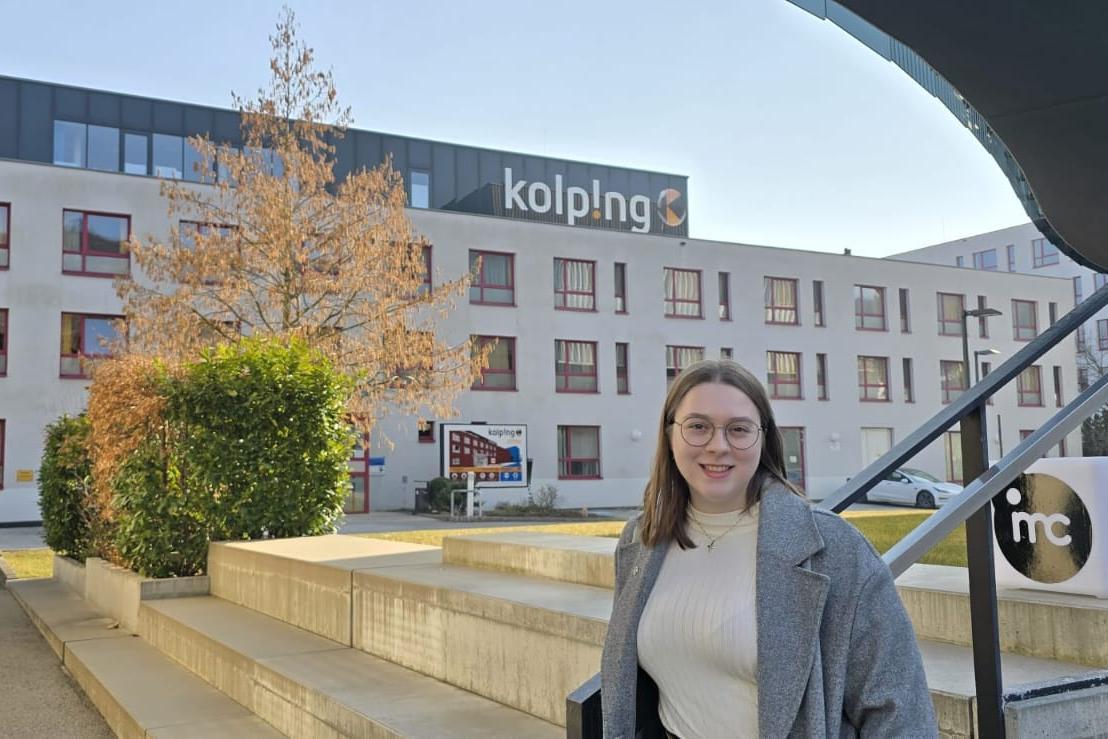
Exploring cellular communication
Angelina Bandemer studies in our Medical and Pharmaceutical Biotechnology master degree programme. For her master thesis, she works within Smart NeuroScreen under the supervision of Christoph Wiesner, Professor at the Institute Biotechnology.
Angelina investigates how stem cells affect neuronal cells. She also explores how the cellular microenvironment influences brain function.
Research within Smart NeuroScreen
Led by Christoph Wiesner, Smart NeuroScreen is developing an AI-supported screening platform. It enables the precise analysis of neuronal cell models. The project aims to support drug discovery for neurodegenerative diseases such as Alzheimer’s, Parkinson’s and amyotrophic lateral sclerosis.
Within this research environment, Angelina studies different cell lines and their interactions. A particular focus lies on extracellular vesicles and their role in mediating cellular effects. “Many questions in this field remain unanswered and much is still to be discovered,” says Angelina Bandemer.
A fascination with extracellular vesicles
Angelina first became interested in extracellular vesicles while studying Medical Biology in Salzburg. Their potential in modern medicine encouraged her to explore the field further.
Her master thesis now allows her to connect this interest with experimental research. At the same time, she can develop a deeper understanding of cellular processes and neuronal function.
Building practical laboratory skills
Apart from a short course during her previous studies, this is Angelina’s first opportunity to gain extensive hands-on wet-lab experience. She is developing her skills in cell culture and experimental assays.
Angelina is also learning to formulate research questions and design her own experiments. The opportunity to work independently gives her space to pursue her scientific ideas. “Being encouraged to think independently and explore my own scientific ideas provides a valuable opportunity to grow as a young researcher,” says Angelina.
Krems as a second home
Outside the laboratory, Angelina enjoys watching Formula 1 and playing tennis. She also leads ÖSM Krems, a Christian student group.
Krems has become a second home for her. She values the combination of nature and student life, as well as the proximity to Vienna. “For me, it’s the perfect place to study, grow and prepare for a career in biotechnology,” says Angelina.