
Hanna Köttl from IMC Krems has received the Danubius Young Scientist Award 2026. One outstanding early-career researcher is selected in each of the 14 participating countries, with Köttl chosen as Austria’s award recipient.
News
Danubius Young Scientist Award 2026 for Hanna Köttl
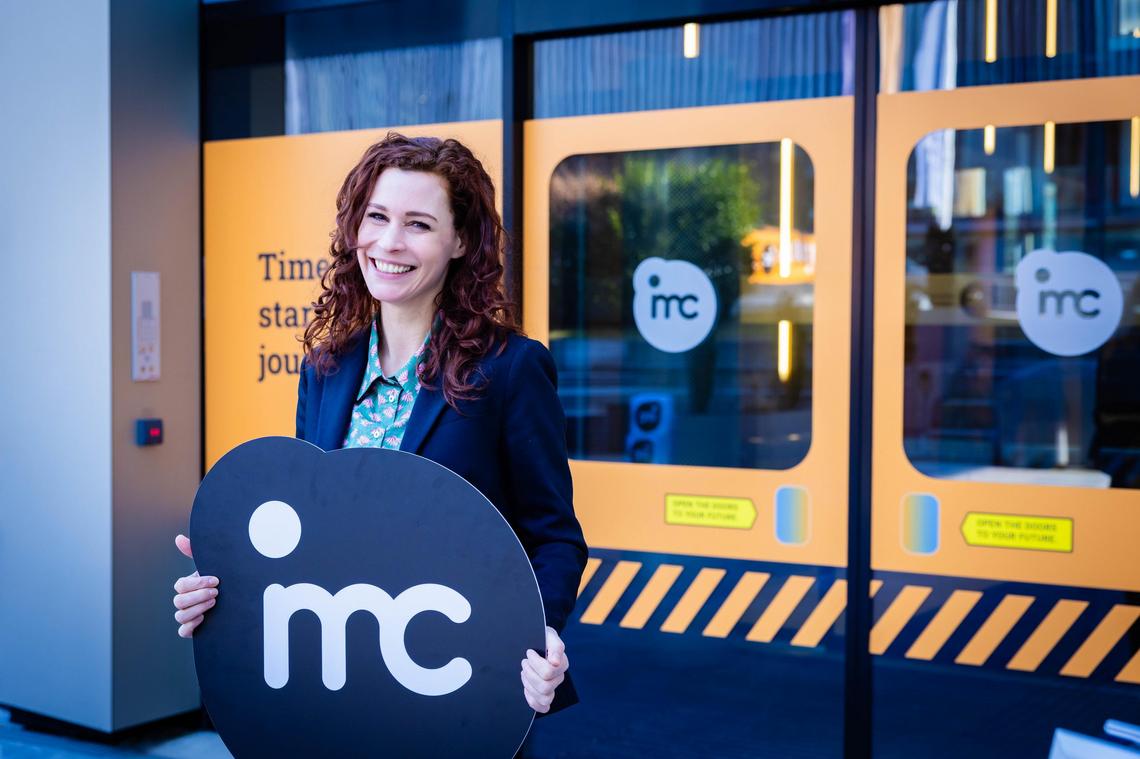
The award ceremony took place on 5 November as part of the annual conference of the Danube Rectors’ Conference (DRC) in Ruse, Bulgaria. The award is presented by the Austrian Federal Ministry of Women, Science and Research (BMFWF), in cooperation with the Institute for the Danube Region and Central Europe (IDM). It recognises outstanding scientific achievements by early-career researchers in and for the Danube Region. The award highlights the international significance of Köttl’s research at the intersection of health sciences, digitalisation and social participation.
Tackling ageism in healthcare
As Researchprofessor focusing on age-inclusive and equitable artificial intelligence in healthcare (EQUIP-AI) and Programme Director of the Master’s degree programme in “Angewandte Gesundheitswissenschaften”, Hanna Köttl explores how ageism – encompassing age-related stereotypes, prejudice and discrimination – can be identified and addressed. Ageism shapes how the abilities, needs and treatment options of people of different ages are perceived and assessed. Age-related prejudice can result in older people being disadvantaged in medical decision-making or not having equal access to appropriate treatment and healthcare services.
Her longstanding commitment to this field is rooted partly in her professional experience as an occupational therapist in acute geriatric care, neurology and psychiatry. During this time, she witnessed older people being excluded from certain treatments despite the potential benefits. Since then, Köttl has examined ageism at individual, societal, institutional and technological levels. Her work focuses on both internalised age stereotypes and structural inequalities, as well as on how healthcare services and digital technologies can be made fairer and more inclusive.
An important milestone was her doctoral research within the European Horizon 2020 Marie Skłodowska-Curie network EuroAgeism. She investigated how societal perceptions of ageing and internalised ageism influence the use of digital technologies in later life. Her research shows that the non-use of digital health and everyday technologies is often not attributable to individual limitations, but rather to social, cultural and structural barriers.
Making artificial intelligence age-inclusive and equitable
Since September 2025, Köttl has held the EQUIP-AI Professorship at IMC Krems, focusing on the opportunities and risks of artificial intelligence in healthcare. AI systems learn from existing data and can therefore reproduce societal prejudices and existing inequalities. As older people remain underrepresented in digital datasets, there is a risk that their needs will not be adequately considered in the development of new technologies.
“AI is never neutral. It learns from data from the past and, unless measures are taken to counteract this, also adopts the prejudices and stereotypes embedded in that data,” Köttl emphasises. Ageism can enter AI systems not only through unbalanced datasets. Older people are also frequently insufficiently involved in research, development and design processes. Köttl’s research therefore examines both potential biases in AI-generated outputs and the social, institutional and ethical conditions under which technologies are developed.
Her research project AgeIsm investigated how age-related assumptions influence clinical decision-making. Empirical studies involving physiotherapy and occupational therapy students also explored whether the considered use of large language models could contribute to fairer clinical decisions. The findings provide a basis for developing educational content on the responsible and age-inclusive use of AI in the training of healthcare professionals.
Participatory research with informal carers
Another key focus is the international project CROB – Collaborative Research on Occupational Balance, led by Köttl, which examines the health, quality of life and occupational balance of informal carers supporting people after a stroke. Building on this work, Köttl is developing a new project funded by the Lower Austrian Society for Research Funding. Together with older informal carers and other relevant stakeholders, the project aims to develop an AI-based solution to improve access to regional support services.
People at different stages of life and groups that have so far been underrepresented are involved from the outset in needs analysis, co-design and testing the AI prototype. This makes it possible to take different levels of digital competence, social circumstances and potential barriers to access into account from the very beginning. Participatory development is a defining feature of Köttl’s research approach: digital solutions should not simply be developed for people, but together with them.
Research at the interface of science, policy and practice
Against the backdrop of demographic change and advancing digitalisation, age-appropriate healthcare is becoming increasingly important. In line with the World Health Organization’s UN Decade of Healthy Ageing (2021–2030), Hanna Köttl is committed to challenging stereotypical perceptions of ageing and raising awareness of the diversity of later life.
Alongside her empirical research, she also contributes her expertise to international collaboration and dialogue between science, policy and practice. Her aim is to translate scientific findings on ageing, digitalisation and fundamental rights into practical recommendations for healthcare and technology development.
The Danubius Young Scientist Award 2026 recognises her scientific commitment and highlights the international relevance of her research in advancing discrimination-free and future-oriented healthcare.