
New state-of-the-art devices for personalised medicine and biotechnological production are strengthening teaching and research at the Institute of Biotechnology at IMC Krems University of Applied Sciences.
Press
Cutting-edge biotechnology for the medicine of the future
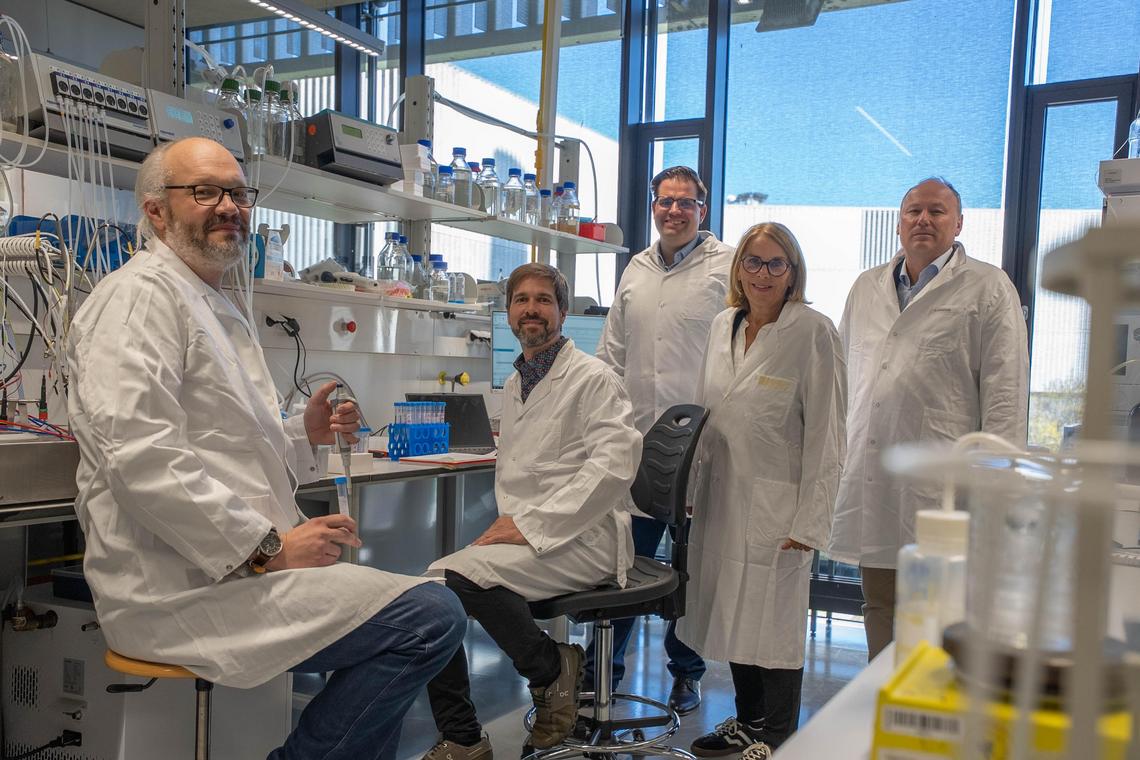
IMC Krems has comprehensively modernised the laboratories of its Institute of Biotechnology, further enhancing its leading position in practice-oriented higher education and applied research in medical and pharmaceutical biotechnology as well as personalised medicine. The centrepieces of this investment are a highly advanced DNA sequencing system and a bioreactor, providing students and researchers with access to technologies used by leading biotech and pharmaceutical companies worldwide.
New technologies for personalised medicine
The new high-throughput DNA sequencing system enables the analysis of the entire genome (genomics) as well as the active genetic information of a cell (transcriptomics). Students learn the complete workflow – from sample preparation and sequencing to bioinformatic data analysis. This technology is a key element of personalised medicine: it makes it possible to identify genetic changes that play a role in diseases such as cancer or rare hereditary disorders and to tailor therapies to individual patients.
Thanks to the system’s low error rate and high flexibility, it can also be applied in clinical research – an important step towards training future specialists in precision medicine.
Bioreactors for industrial biotechnology
The modernised laboratory is also equipped with several bioreactors similar to those used in industrial biotechnological production. Here, students learn how therapeutic proteins such as insulin are produced using genetically optimised microorganisms. The reactor allows precise control of parameters such as temperature, pH value and oxygen levels to simulate optimal production processes.
In addition to the bioreactor, analytical and purification systems are available, allowing the entire process from culture to protein purification to be simulated – providing hands-on training to industry standards.
“We are consistently investing in infrastructure that gives our students and researchers access to the most advanced technologies,” emphasises Ulrike Prommer, CEO of IMC Krems. “By expanding our laboratory equipment, we are not only strengthening the education of highly qualified professionals in future-oriented fields such as medical and pharmaceutical biotechnology and precision medicine – we are also making an important contribution to research and innovation in Austria.”
Strategic development of the degree portfolio
This investment underlines the expansion of the degree portfolio in the field of Science & Technology, including new master degree programmes such as OMICS Technologies and Data Science in Biomedicine, Sustainable Chemistry and Digital Processing and Engineering Responsible AI Systems.
These programmes are aimed at graduates of a bachelor degree programme in biotechnology, chemistry, computer science, engineering or related disciplines and are offered in part-time study formats. The close integration of theory, practice and applied research remains a key quality feature at IMC Krems.
Genomics: Study of the complete DNA of an organism
Transcriptomics: Analysis of RNA, i.e. the genes currently active in a cell
Bioinformatics: Computer-based analysis of large biological data sets
Bioreactor: Device in which microorganisms or cells are cultivated under controlled conditions
Therapeutic proteins: Proteins used as pharmaceuticals, such as insulin