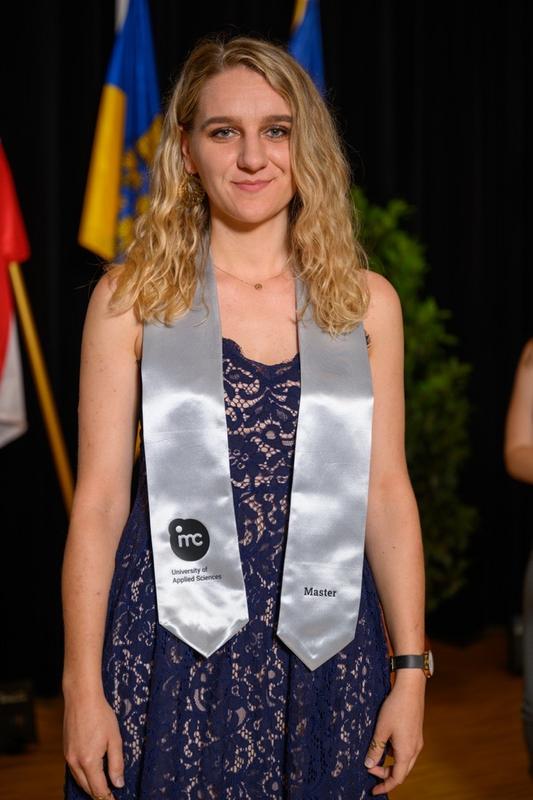
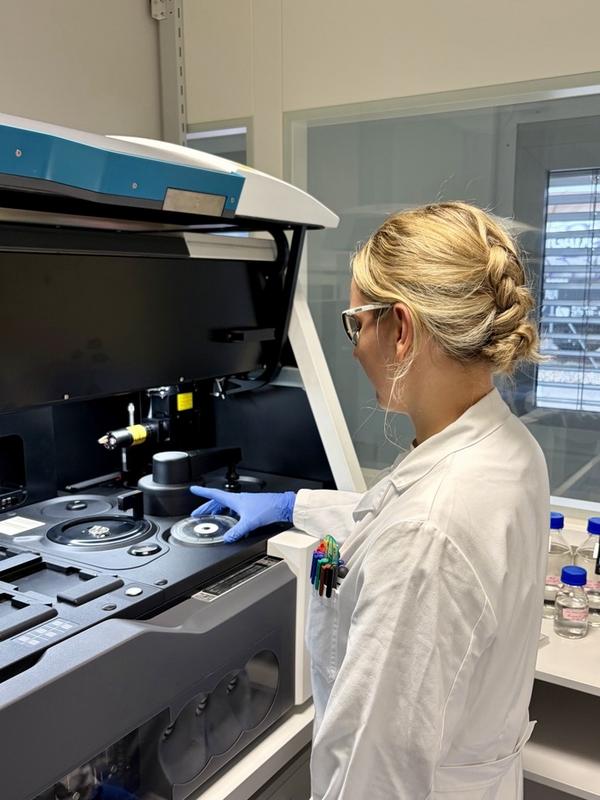
After completing her master degree in Medical and Pharmaceutical Biotechnology at IMC Krems, Anja Holzer found her place in applied research. Today, she works as a Laboratory Scientist at the Institute Krems Bioanalytics, the contract research institute of IMC Krems, where she supports the development and validation of bioanalytical methods for pharmaceutical research.
Story
Career between laboratory science and innovation
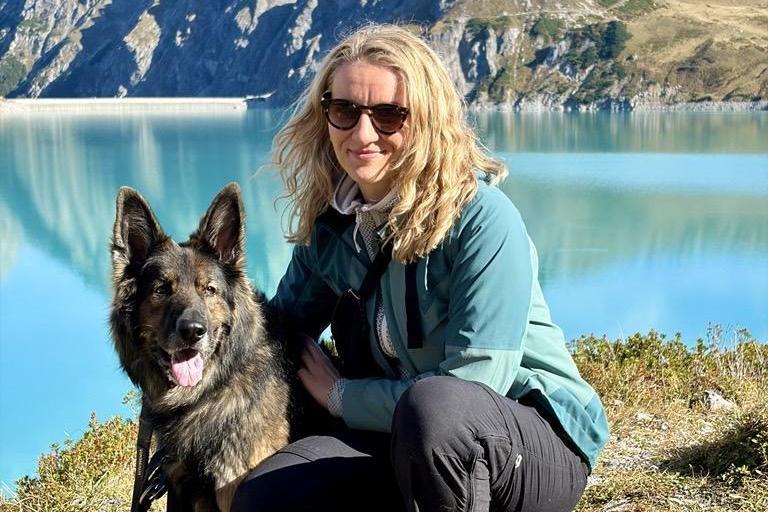
Curiosity, scientific thinking and a desire to contribute to the development of new therapies have motivated Anja Holzer from an early stage. Following her master degree, she joined the Institute Krems Bioanalytics, which has established itself as an important partner to the pharmaceutical and biotechnology sectors. According to Christian Lubich, Head of the Institute, the organisation is a leading provider of services for preclinical and clinical drug development.
In this interview, our alumna reflects on her career path, current developments in Bioanalytics and the lasting impact her studies continue to have on her professional life.
You are currently working as a Laboratory Scientist at the Institute Krems Bioanalytics. How did your journey lead from your studies to your current position, and which experiences were particularly formative along the way?
My academic journey took me from a Bachelor degree in Biomedical Science and Biotechnology at the University of Veterinary Medicine Vienna to the master degree programme in Medical and Pharmaceutical Biotechnology at IMC Krems. Through my bachelor and master theses, as well as several research placements at the University of Veterinary Medicine Vienna, the Medical University of Vienna and Karl Landsteiner University, I gained broad laboratory experience. This ranged from cell culture and molecular biology techniques to bioanalytical assays and provided an excellent foundation for my current role at the Institute Krems Bioanalytics.
What sparked your interest in biotechnology, bioanalytics and research, and what continues to inspire you about your work today?
I am fascinated by the combination of scientific curiosity, precise laboratory work and the direct impact our work can have. Developing and validating bioanalytical methods generates reliable data that advances pharmaceutical research and ultimately benefits patients.
Drug development is currently evolving at a rapid pace. Topics such as biomarkers, cell and gene therapies, and novel analytical technologies are opening new possibilities. Which trends do you believe will have the greatest impact on bioanalytics in the years ahead?
Increasingly complex therapeutics, ranging from cell and gene therapies to advanced biologics and personalised medicine, require highly specialised, regulatory-compliant and, in many cases, automated analytical approaches. These are essential to reliably demonstrate safety, efficacy and quality.
Which knowledge, skills or experiences from your master degree at IMC Krems helped you most when entering the profession and continuing to support you in your daily work?
The practice-oriented nature of the programme, the small laboratory groups and the close integration of biotechnology, analytical sciences and scientific problem-solving were particularly valuable. Working independently, from experimental design and data analysis to documentation, still forms the basis of my work in method development and validation today. In addition, guest lecturers from industry provided early insights into regulatory requirements, quality standards and current topics in applied research.
The Institute Krems Bioanalytics supports projects ranging from preclinical studies to clinical applications. What do you find most rewarding about applying scientific knowledge in an environment that can contribute directly to the development of new therapies?
What motivates me most is knowing that our work produces reliable, auditable data that directly supports decision-making in drug development. The combination of complementary technologies, such as mass spectrometry, advanced cell analysis and highly sensitive immunoassays, not only creates robust scientific evidence but also supports my own professional development. Routine is rare in our field, as methods must be tailored to the specific research questions and quality requirements of each client.
Where would you like to focus on your professional development in the coming years, and which developments within the life sciences sector are you following most closely?
I would like to deepen my expertise at the intersection of high sensitivity Bioanalytics, data quality and automation. In particular, I am closely following developments in artificial intelligence-supported data analysis and laboratory automation, which have the potential to improve throughput, reproducibility and precision in a sustainable way.
What advice would you give to students aspiring to build a career in biotechnology, pharmaceuticals or applied research?
Take every opportunity to gain practical laboratory experience during your studies, ideally across both academic research and industry settings. A combination of curiosity, attention to detail and perseverance is invaluable. Build a strong methodological foundation in areas such as assay development, validation, quality management and data analysis. Equally important are good documentation practices and an understanding of regulatory requirements.
Actively seek out mentors, engage with professional networks and participate in conferences and specialist communities. Diversity is another topic that is particularly important to me. Women play a vital role in the life sciences sector, and visibility, equal opportunities, mentoring and a willingness to take on responsibility are key to unlocking individual potential and helping shape the future of the field.