
When it comes to unravelling the secrets of the human immune system, Viktoria Beer is in her element. As a young researcher at the Institute Krems Bioanalytics at IMC University of Applied Sciences Krems, she is part of the FFG-funded project “ImmunoProteomics”, dedicated to one of the most compelling fields in modern biomedicine: analysing immune system proteins using mass spectrometry. Her particular focus lies on immunoglobulins — the antibodies that protect our bodies from infection every single day.
Press
Tracing the Path of Antibodies
Decoding the Language of the Immune System
“Each individual’s antibody repertoire is highly heterogeneous, which means immune responses can vary significantly from person to person,” Beer explains. “By characterising changes in the antibody repertoire associated with disease, we gain a deeper understanding of the underlying immunological mechanisms. In the long term, this knowledge can contribute to the development of new therapeutic strategies, enhance our understanding of autoimmune processes, and help assess adverse immune reactions.” The prospect of harnessing the body’s natural immune response for targeted therapeutic strategies is what drives her scientific curiosity.
High-Tech in the Laboratory, Patience in the Data Deluge
Beer’s current research centres on deciphering the amino acid sequences of human antibodies — a task that has only become feasible thanks to recent advances in mass spectrometry.
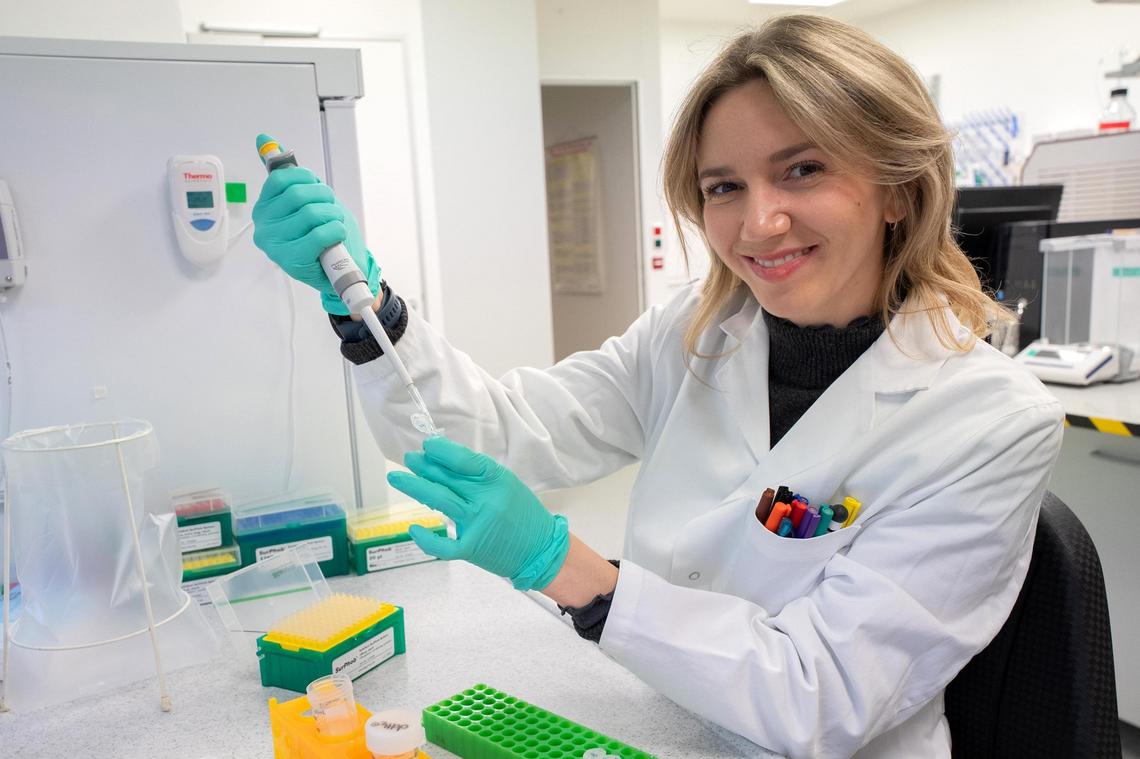
“In addition to reviewing literature, brainstorming and planning next steps, I spend most of my time in the laboratory conducting biochemical experiments,” she says. “Our aim is to establish a workflow that delivers high-quality data for the sequence analysis of circulating antibodies. That said, the sheer volume of data generated in proteomics research is probably the greatest challenge. It results in long hours at the computer and intensive discussions with bioinformaticians.”
Her path to this demanding field was not meticulously planned. After completing her secondary education in 2012, Beer chose to study Biomedical Science at the FH Campus Wien, where she earned both Bachelor’s and Master’s degrees. She gained her first professional experience in routine molecular microbiological diagnostics before joining the Institute Krems Bioanalytics in 2020.
Starting as a research associate, she developed bioanalytical methods and supervised projects. In 2023, she assumed leadership of the Methods Development and Validation group. Parallel to her professional advancement, she began her doctoral studies in 2024 at TU Wien, where she now conducts research in biomedical mass spectrometry.
Between Science and Summits
Yet Viktoria Beer is more than a researcher — she is also a mountain rescuer and passionate mountaineer. “There is nothing better for clearing your head than reaching a summit after physical exertion outdoors and being able to take in the view,” she says. The same perseverance and solution-oriented mindset that define her scientific work accompany her in the mountains.
Although she once dreamed of becoming a hairdresser as a child, she is grateful for the path she ultimately chose. “Judging by my rather clumsy attempts at cutting hair during the COVID pandemic, we can probably be thankful that I opted for a different career,” she laughs. Instead, she finds fulfilment in asking the right questions, identifying solutions and truly understanding the results — a continuous cycle that fuels her curiosity and scientific drive.
By combining analytical rigour with passion, resilience and a clear objective, Viktoria Beer is committed to deepening our understanding of the human immune system and translating that knowledge into therapeutic innovation. Her work in biomedical proteomics demonstrates how advanced analytical technologies are opening new windows into complex immunological processes.
About Viktoria Beer
Viktoria Beer is a research associate and Head of Methods Development and Validation at the Institute Krems Bioanalytics at IMC University of Applied Sciences Krems. She studied Biomedical Science at FH Campus Wien and has been pursuing a PhD at TU Wien since 2024, specialising in biomedical mass spectrometry. Her research focuses on the proteomics-based characterisation of immunoglobulins.


