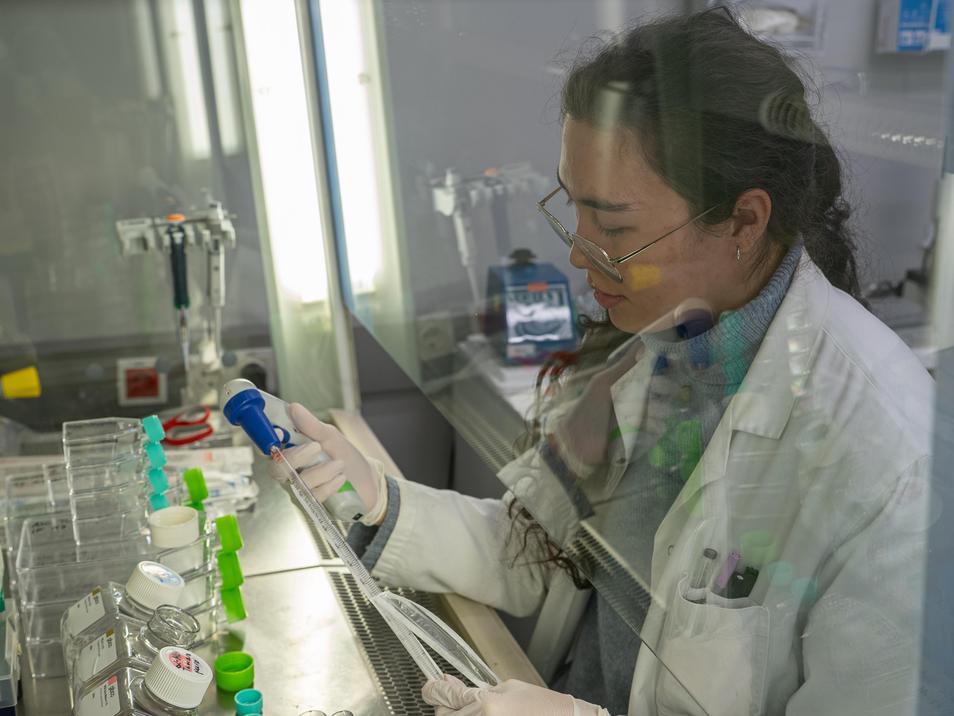
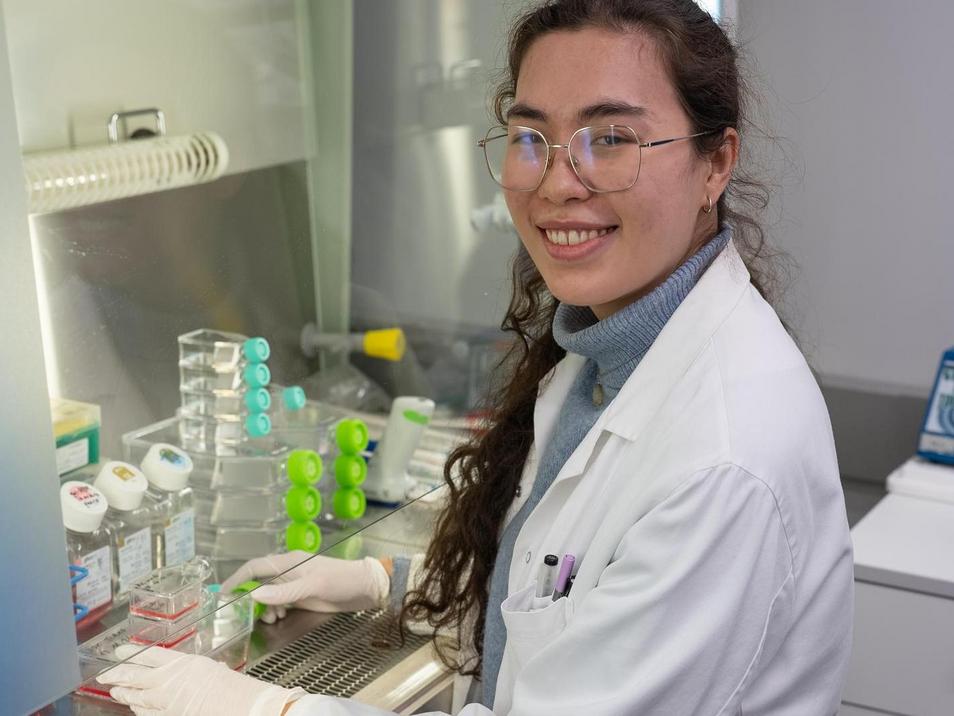
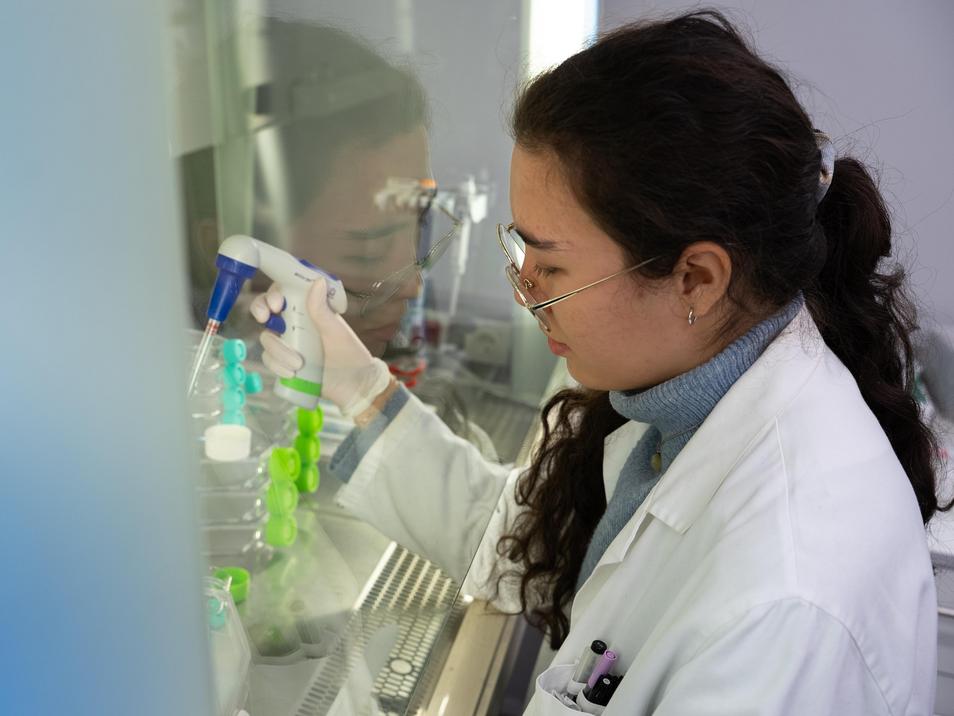
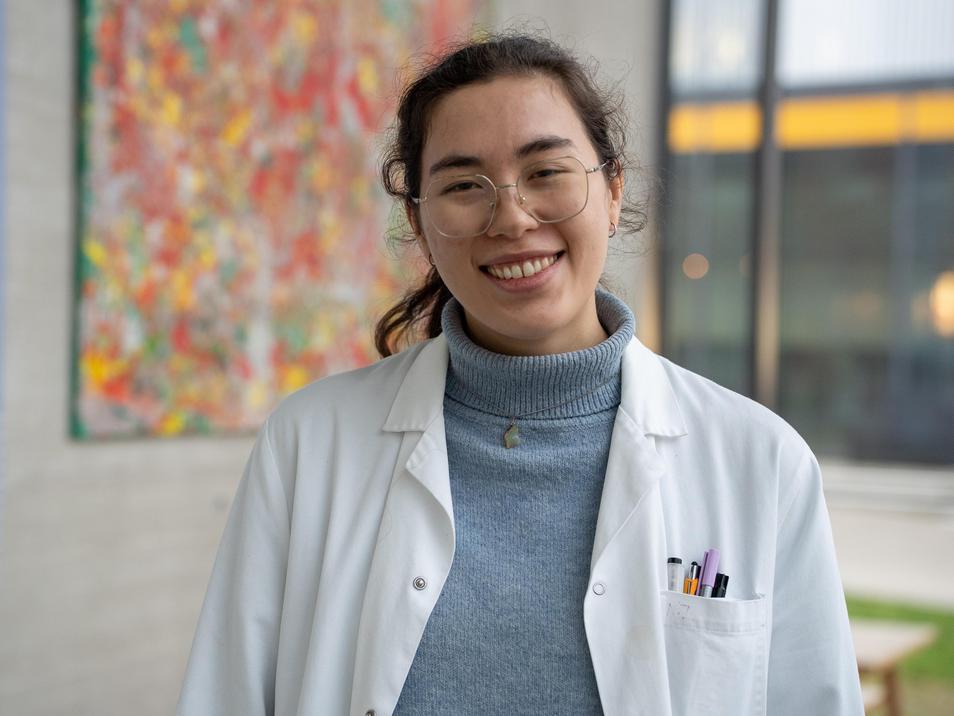
Early-career researcher Isabella Fischer is investigating at IMC Krems how stem cells and the tiny messengers they release could contribute to the regeneration of damaged tissue. At the heart of her doctoral research is a largely unexplored component of the immune system, which could open up new possibilities in regenerative medicine.
Press
A Starry Sky in the Lab – and a Vision of Helping the Body Heal
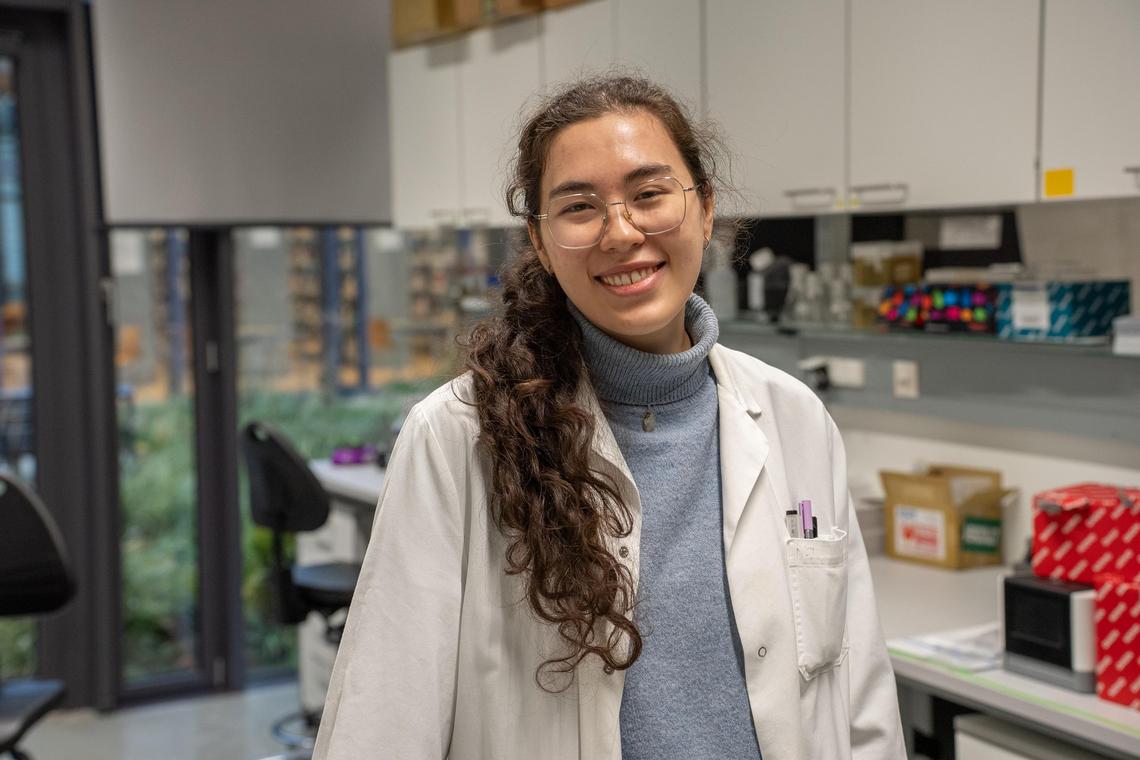
The first time Isabella Fischer, MSc. saw the extracellular vesicles released by her stem cells on a computer screen, they reminded her of a starry sky: countless tiny points of light, each representing a particle released by her cells. “Until then, my research project had mainly involved experiments, data and theoretical questions. In that moment, the purpose of my work became tangible for the first time,” recalls the young scientist. It is moments like these – when something previously abstract in basic research becomes visible – that fuel her enthusiasm for science.
At the Institute of Biotechnology at IMC Krems, Fischer is part of Prof.(FH) Mag. Dr. Christoph Wiesner’s research group, exploring a question with potential significance for regenerative medicine: how can the properties of stem cells be influenced to make them even more effective in supporting the body's natural ability to repair damaged tissue? As part of her doctoral research within the FWF-funded EVISION project, she is focusing on a little-explored component of the immune system: Toll-like receptor 10, or TLR10 for short.
An unexplored frontier of the immune system
TLR10 belongs to a family of receptors involved in recognising and mediating immune responses. While other members of this receptor family have been studied in considerable detail, relatively little is known about the function of TLR10 – particularly its role in stem cells. This is precisely where Fischer's research comes in. She is investigating whether and how this receptor influences the properties of stem cells and, potentially, their ability to support tissue regeneration.
To explore this, she experimentally alters the amount of TLR10 produced by the cells and compares their behaviour under different growth conditions. Alongside conventional cell culture methods, she also uses three-dimensional culture systems that more closely replicate the natural environment inside the human body than traditional flat culture dishes. This is important because the environment in which cells grow can have a significant influence on how they develop and which biological properties they acquire.
Another key focus of her work is on extracellular vesicles: tiny particles released by cells that carry biological information and enable communication between cells. They could play an important role in influencing regenerative processes in the future. Fischer therefore studies not only the stem cells themselves but also the vesicles they release. Her aim is to identify the conditions under which both the cells and their molecular messengers develop particularly promising properties.
When curiosity becomes a vision
For Fischer, the idea of one day working in a laboratory and investigating questions like these began at an early age. “I actually wanted to become a scientist when I was a child,” she recalls. She was fascinated by images and documentaries showing people in laboratories investigating things that are often invisible to the naked eye – yet have an enormous impact on our bodies and our lives.
Her interest in medicine also has deep family roots: several generations of her family have worked in healthcare. After completing a Bachelor's degree in Biomedical Science and a Master's degree in Bio Data Science, she decided to pursue her interest in regenerative medicine. She is now studying Regenerative Medicine at the University for Continuing Education Krems and has been conducting research at IMC Krems since October 2024. What drives her is the combination of scientific curiosity and the prospect of making a practical difference: “I don't just want to understand how cells function and communicate with one another. I also want to work on something that could one day help people.”
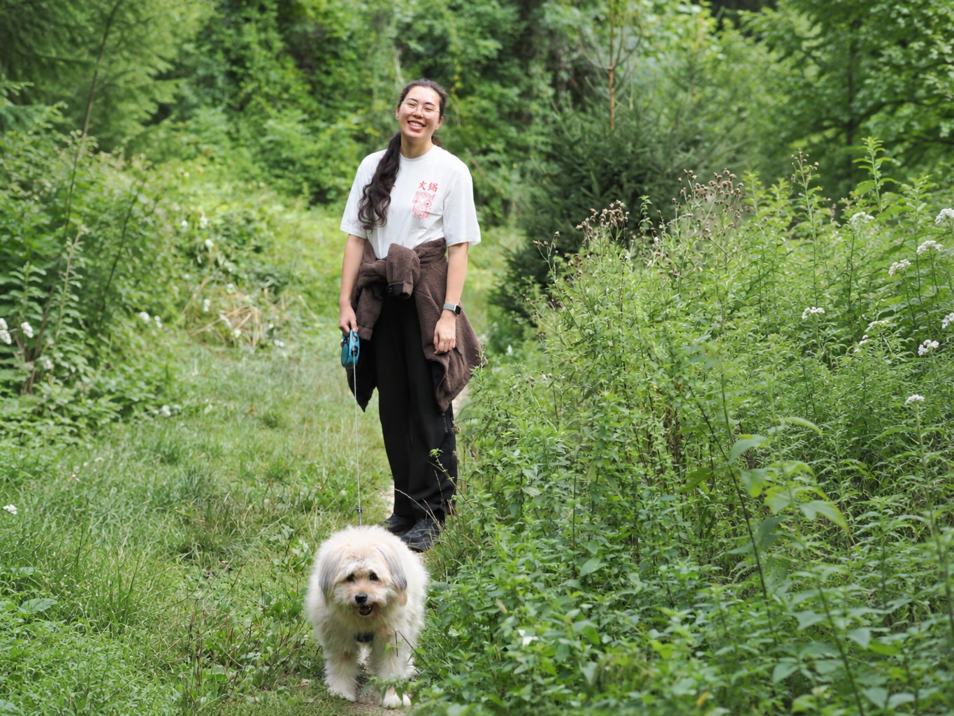
It is this combination that makes research so fascinating for her. Answering one question, she believes, rarely marks the end of an investigation; more often, it opens up countless new ones. And there is plenty of room for creativity beyond the laboratory, too. Spending time with her dog, cooking, painting, embroidery and other crafts help her unwind. Her enjoyment of discovery, it seems, extends well beyond her scientific work.
About Isabella Fischer
Isabella Fischer, MSc, has been a researcher at the Institute of Biotechnology at IMC Krems since October 2024 and is pursuing her doctoral studies as part of the FWF-funded EVISION project in Prof.(FH) Mag. Dr.Christoph Wiesner's research group. She completed her Bachelor's degree in Biomedical Science in 2022 and her Master's degree in Bio Data Science in 2024, receiving a merit-based scholarship for each. She completed both her Bachelor's and Master's theses at the Ludwig Boltzmann Institute for Osteology under the supervision of Thomas Dechat, PhD. She is currently studying Regenerative Medicine at the University for Continuing Education Krems.
Isabella Fischer – The Quick-Fire Q&A
- Science is … fascinating.
- For me, research is … particularly rewarding when something finally works.
- In the future, I hope … to continue researching such fascinating topics.
- In the morning, I need … a coffee.
- I unwind by … spending time with my dog or pursuing my creative hobbies.
- The best way for me to relieve stress is … to immerse myself in my hobbies after work.
- I tackle difficult challenges by … usually brainstorming ideas and discussing possible solutions with my partner.
- As a child, I wanted to become … a scientist.
- I studied Bio Data Science because … I wanted to understand the data I generate myself.
- On my bedside table, you'll find … the book I'm currently reading and a bedside lamp.
- What fascinates me about research is … that every question answered gives rise to countless new ones.